

Sports Performance Testing: What Actually Matters
Athletes love numbers. Vertical jump, 40 time, max squat, force plate data, heart rate, wearable scores, readiness numbers, all of it. Numbers can be useful. Numbers can also become expensive decoration if nobody knows what they mean or what to do with them.
Sports performance testing should answer three questions: Where are you now? What is limiting you? What should we train next? If testing does not help answer those questions, it is just a science fair with better lighting.
At Complex, testing is not about making athletes feel judged. It is about building a plan of care that is specific, measurable, and tied to performance. We test so we can stop guessing. Let's get it.
Why Testing Matters
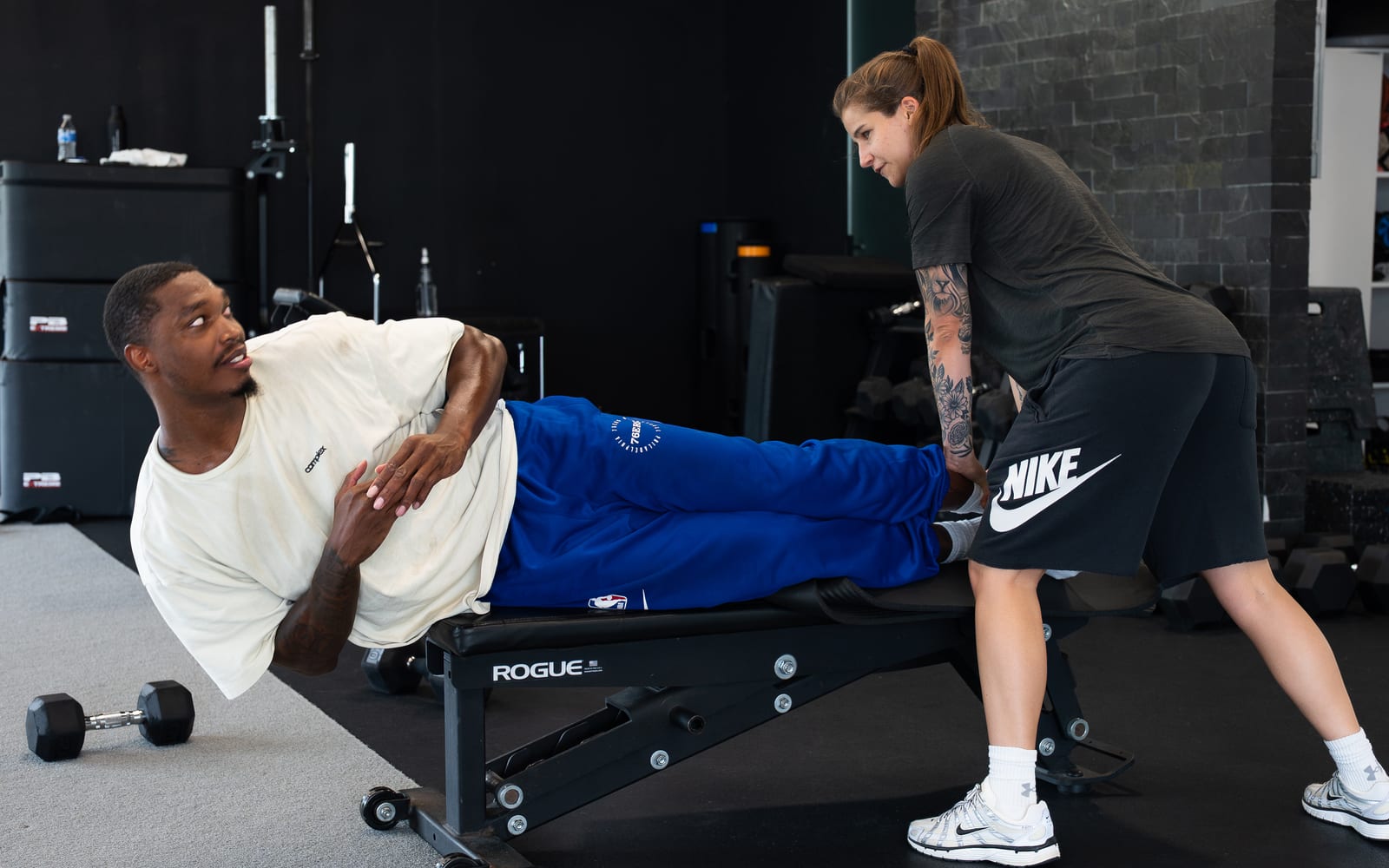
If you want to improve, you need a baseline. If you are returning from injury, you need proof that your body is ready for the next demand. If you are training for speed, power, or durability, you need to know whether the program is working.
Good testing helps us see:
- Strength asymmetries
- Power deficits
- Movement strategy problems
- Conditioning gaps
- Landing and deceleration control
- Readiness after injury
- Progress over time
This is especially important when an athlete "feels fine" but still moves differently side to side. Feeling fine is not the same as being ready. If you have been cleared after an injury, read Return to Sport: Rebuild Without Re-Injury. That post explains why time-based clearance is not enough.
Test 1: Strength Symmetry
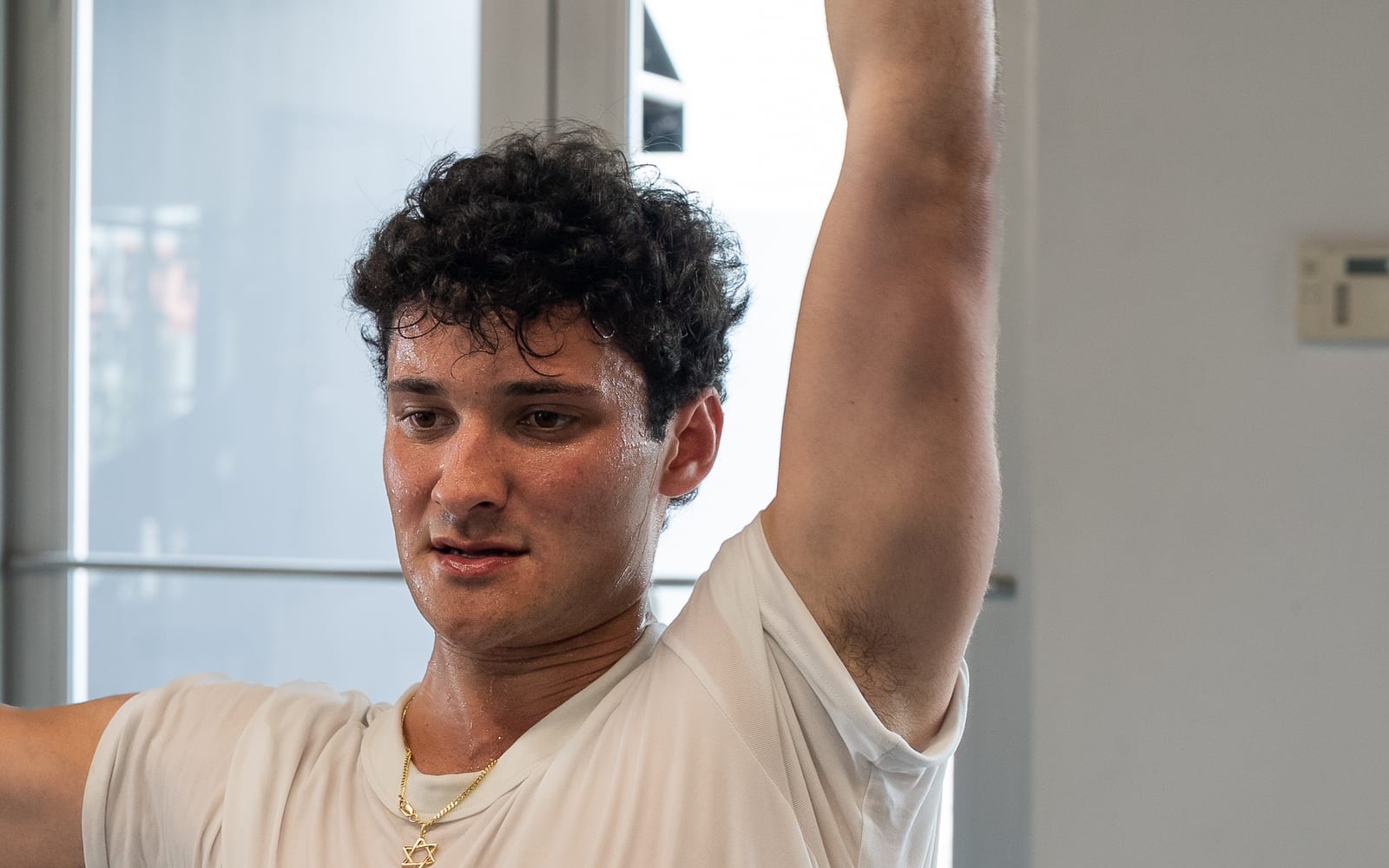
Strength testing is one of the biggest pieces. We want to know whether the right and left sides are producing similar force, and whether that force is enough for the sport.
Useful options include:
- Isometric strength testing
- Handheld dynamometry
- Isokinetic testing when available
- Single-leg strength testing
- Repetition-based strength estimates
In return-to-sport settings, limb symmetry is often discussed around 90% or higher. But do not get cute with one number. A 90% score on a weak athlete is still weak. Symmetry matters, but total capacity matters too.
Test 2: Jump Performance
Jump testing tells us about power, stiffness, coordination, and asymmetry. Countermovement jumps, squat jumps, drop jumps, and single-leg jumps can reveal what regular strength testing misses.
A horizontal hop might look symmetrical because the athlete finds a clever compensation. A vertical jump or force plate measure may expose deficits in eccentric braking, concentric force, or landing control.
That is why testing should include more than one measure. One test is a snapshot. A test battery is a story.
Test 3: Speed and Acceleration
If your sport requires sprinting, testing speed matters. But not every athlete needs the same sprint test.
For some, we look at:
- 10-yard acceleration
- 20-yard sprint
- Flying 10s
- Split times
- Sprint mechanics video
- Repeated sprint ability
The goal is not just "get faster." The goal is to see where the limitation lives. Is it force production? Hip position? Ground contact? Arm action? Poor stiffness? Lack of exposure to speed?
If hamstrings keep acting up when you sprint, pair testing with the principles in Hamstring Strains Keep Coming Back? Here’s the Fix.
Test 4: Deceleration and Change of Direction

Everybody loves acceleration until it is time to stop. Deceleration is where a lot of injuries happen because the body has to absorb force quickly and organize the next movement.
We test:
- Drop landings
- Lateral bounds
- Pro-agility variations
- 5-10-5 drills
- Cutting mechanics
- Single-leg stop-and-stick drills
The key is movement quality. Does the knee cave? Does the trunk collapse? Does the athlete avoid one side? Do they look powerful or like they are bargaining with gravity?
Test 5: Mobility That Actually Matters
Mobility testing should be sport-specific. A baseball player, runner, basketball athlete, and powerlifter do not need identical ranges everywhere.
We often check:
- Ankle dorsiflexion
- Hip internal and external rotation
- Thoracic rotation
- Shoulder flexion and rotation
- Squat and lunge positions
Mobility matters when it changes mechanics. If the ankle is locked, the knee and hip compensate. If the thoracic spine is stiff, the shoulder or low back pays. That is why we connect testing with injury prevention screening, not random mobility drills.
Test 6: Conditioning and Repeatability

A single great rep is nice. Sport requires repeatability. Can you produce quality movement under fatigue? Can you maintain speed late in a session? Can you recover between bursts?
Conditioning tests should match the sport. A soccer athlete, tennis player, and lifter do not need the same energy system work. Again, individual basis. Again, no cookie-cutter nonsense.
Which Numbers Do Not Matter?
Numbers that do not change decisions are not priorities.
If a test does not affect the program, the return-to-play decision, or the athlete's understanding, it is probably noise. We are not collecting data to feel fancy. We are collecting data to train better.
We are doing this simply because it's best for your function, but also because it's what I chose. The number has to earn its spot.
Quick Takeaways
- Sports performance testing should guide decisions, not decorate reports.
- Strength symmetry and total strength both matter.
- Jump testing reveals power and landing deficits that strength tests can miss.
- Speed testing should match the sport and athlete.
- Deceleration is just as important as acceleration.
- Mobility only matters when it affects positions and performance.
- Useful tests change the plan.
FAQs
1. How often should athletes test?
Every 6-12 weeks works for many training blocks. Post-injury athletes may need more frequent checkpoints.
2. Do I need force plates?
They are useful, but not mandatory. Good coaching and consistent tests can still provide strong information.
3. What is a good limb symmetry score?
Many return-to-sport models use 90% or higher, but context matters. Total strength, movement quality, and sport demands also count.
4. Can testing prevent injury?
Testing does not prevent injury by itself. It identifies gaps so the plan can address them.
5. What if my numbers are bad?
Good. Now we know what to train. Bad data is only a problem if you ignore it.
References
- Welling, W., et al. (2020). "Association between Functional Performance and Return to Performance in High-Impact Sports after Lower Extremity Injury." Sports Medicine - Open.
- Davies, G. J., et al. (2021). "From Rehabilitation to Sport Performance: A Criterion-Based Functional Return to Sport Testing Algorithm." Sports Medicine.
- Webster, K. E., & Hewett, T. E. (2020). "Return to Sport Tests' Prognostic Value for Reinjury Risk after ACL Reconstruction." Medicine & Science in Sports & Exercise.
- Dingenen, B., & Gokeler, A. (2017). "Optimization of the return-to-sport paradigm after anterior cruciate ligament reconstruction." Sports Medicine.
Let's get you better. Get performance tested with Rafael or book a session so your training is built on useful numbers, not guesses.
Ready to Start Your Journey?
Tell us your goals and we'll build a personalized plan to get you moving, stronger, and performing at your best.