

Return-to-Play Testing: The Metrics We Use Before Clearing You
"Can I return to my sport yet?" is the question every injured athlete asks. My answer is never based on how long it has been. It is based on what you can prove.
Return to play testing gives us objective data—strength symmetry, hop quality, movement control, and sport-specific readiness—so we are not guessing with your season or your graft. Passive table work has benefits. But capacity is rebuilt through loading. Testing tells us whether that loading actually worked.
Here is what we measure before clearance.
Why Testing Matters More Than Time

Surgeons and protocols give timelines. Timelines are guides, not guarantees. Athletes who return based on criteria—not calendar dates—have lower reinjury rates.
Testing answers:
- Is the operated side strong enough?
- Can you land and decelerate with control?
- Are you symmetrical enough for your sport?
- Can you handle change of direction without compensation?
- Are you psychologically ready?
If you cannot pass the tests, you are not ready. That is blunt. It is also how we keep you on the field longer.
Metric 1: Isometric and Dynamic Strength
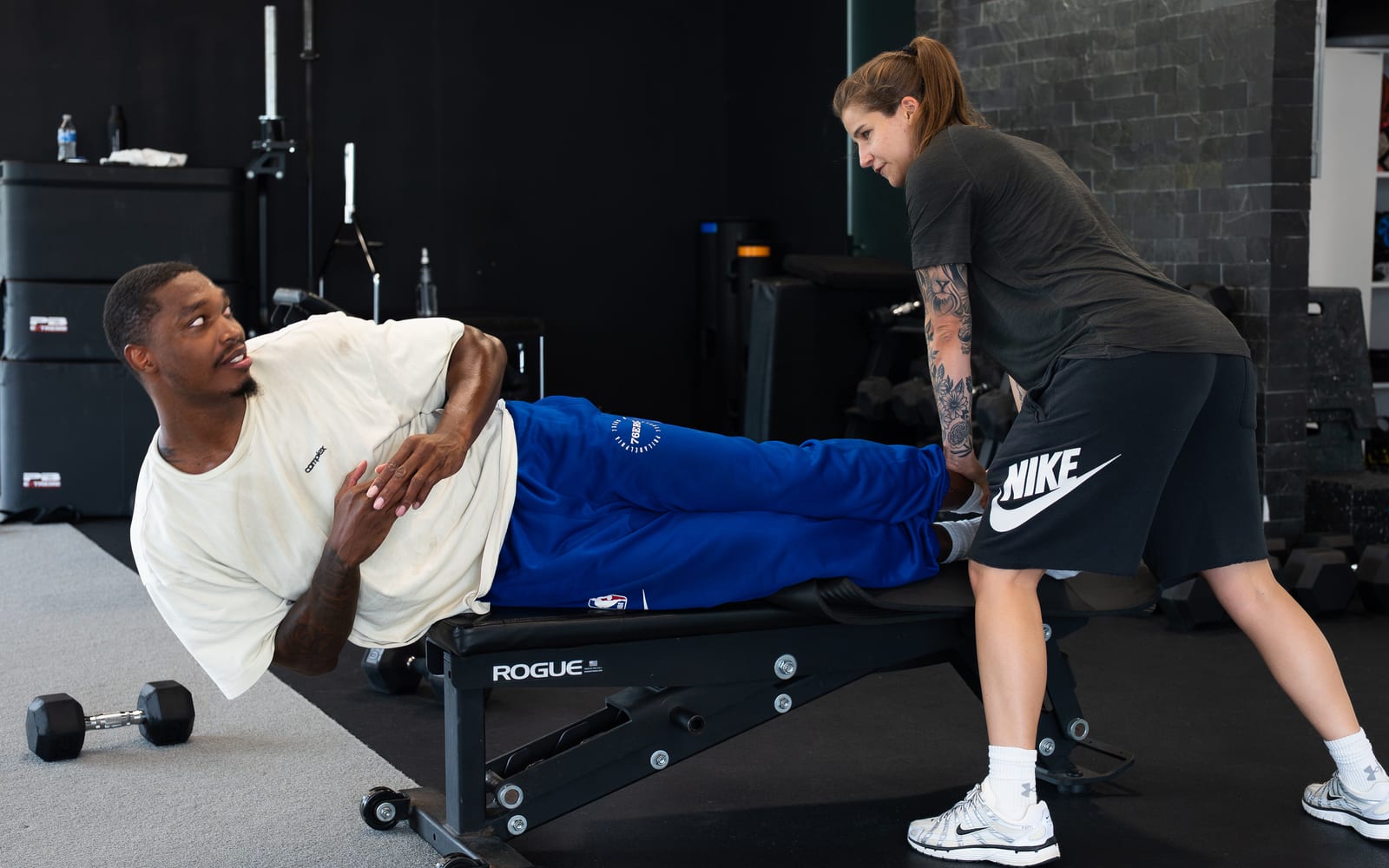
Quad strength is non-negotiable after knee surgery—especially ACL reconstruction. We measure limb symmetry index (LSI) for knee extension and often hamstring strength as well.
What we look for:
- LSI of 90% or higher for many sports
- 95%+ for high-demand cutting athletes when possible
- Quality of effort—no compensation, no trunk lean, no pain spikes
Handheld dynamometry, isokinetic testing when available, or rep-based estimates all have a place. The method matters less than consistency and honest comparison side to side.
Metric 2: Hop and Jump Tests
Hop tests expose what strength numbers sometimes hide—how you actually use the leg under impact.
Common tests:
- Single-leg hop for distance
- Triple hop
- Crossover hop
- 6-meter timed hop
We care about distance and control. A long hop with a valgus collapse or trunk rotation is not a pass. Stabilize the landing. Control the knee over the foot. Breath. Then we talk about clearance.
Metric 3: Single-Leg Movement Quality
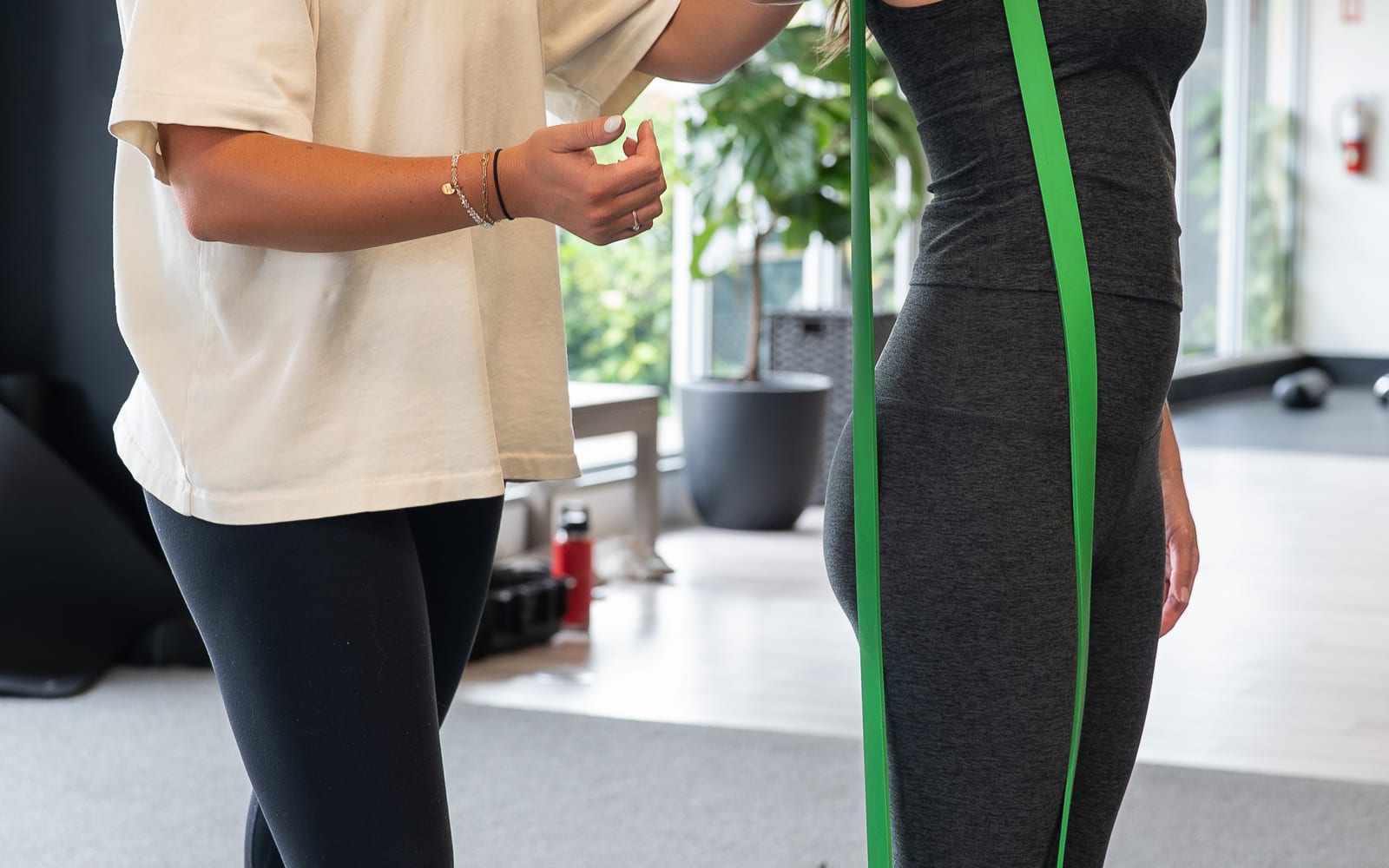
Can you perform a single-leg squat, step-down, or landing drill without the knee caving, hip dropping, or pain increasing?
These tasks translate directly to sport. If you cannot control slow movements, you will not survive fast ones.
Metric 4: Change of Direction and Deceleration
Sport is not straight lines. We progress lateral shuffles, cuts, decelerations, and reactive drills when strength and hop criteria support it.
We are loading your hip into the frontal plane to build your capacity to control and absorb force, redirect, and generate power when you cut and change direction on the court. If that work was skipped in rehab, testing will show it immediately.
Metric 5: Psychological Readiness
Fear changes mechanics. We use validated questionnaires—like the ACL-RSI for ACL athletes—to assess confidence and willingness to perform sport movements.
Readiness is not purely physical. But physical proof usually helps the mental side. Keep going through the progressions. Trust builds with competence.
Metric 6: Sport-Specific Exposure
Before full clearance, athletes should tolerate progressive sport-like demands: practice intensity, controlled scrimmage, position-specific drills, or graded return-to-run/sprint progressions.
For football athletes in Miami, that might mean a structured progression outlined in our football comeback plan. For ACL cases, pair testing with the full ACL rehab timeline.
What Does Not Count as a Test
- "I feel good today"
- "My friend returned at six months"
- "Pain is mostly gone"
- "I can leg press a lot of weight bilaterally"
Those are clues. They are not clearance criteria.
Quick Takeaways
- Return-to-play decisions should be criterion-based, not calendar-based.
- Strength symmetry—especially quad strength—is a foundation metric.
- Hop tests reveal control and impact tolerance that strength alone may miss.
- Single-leg movement quality and change-of-direction work are essential for field and court sports.
- Psychological readiness matters and should be assessed.
- Sport-specific exposure confirms lab metrics translate to the game.
- Testing protects you from returning before capacity matches demand.
FAQs
1. What LSI do I need to return to sport?
Many protocols use 90% as a minimum; high-risk sports often benefit from 95%+.
2. Do I need force plates or isokinetic testing?
Not always. Consistent, well-administered field tests still provide valuable data.
3. Can I fail one test and still return?
It depends on the deficit and your sport. One weak area may require more time—not a rushed return.
4. How often should I retest?
Every few weeks during late-stage rehab, or whenever programming shifts significantly.
5. What if I passed tests but still feel unstable?
That warrants deeper look at swelling, fear, or sport-specific gaps. See why your knee still feels unstable.
References
- Webster, K. E., & Hewett, T. E. (2020). "Return to Sport Tests' Prognostic Value for Reinjury Risk after ACL Reconstruction." Medicine & Science in Sports & Exercise.
- van Melick, N., et al. (2016). "Evidence-based ACL rehabilitation guidelines." British Journal of Sports Medicine.
- Welling, W., et al. (2020). "Association between Functional Performance and Return to Performance after Lower Extremity Injury." Sports Medicine - Open.
- Davies, G. J., et al. (2021). "Criterion-Based Functional Return to Sport Testing Algorithm." Sports Medicine.
Let's get you better. Schedule your sports rehab assessment with Anderson or reach out for details on booking an evaluation.
Ready to Start Your Journey?
Tell us your goals and we'll build a personalized plan to get you moving, stronger, and performing at your best.