

ACL Rehab Timeline: What 'Return to Sport' Really Requires (Not Just Time)
After an ACL reconstruction, the first question athletes ask me is, "Can I return to my sport yet?" Let me be blunt: the answer isn't a single date circled on a calendar. The ACL return to sport timeline is entirely dictated by objective criteria—your strength, stability, and movement capacity—not just the weeks since your surgery. At Complex Physical Therapy & Performance, we help post-op ACL athletes hit those rigid benchmarks so that when they do return, they stay returned.
Why Time Alone Isn't Enough
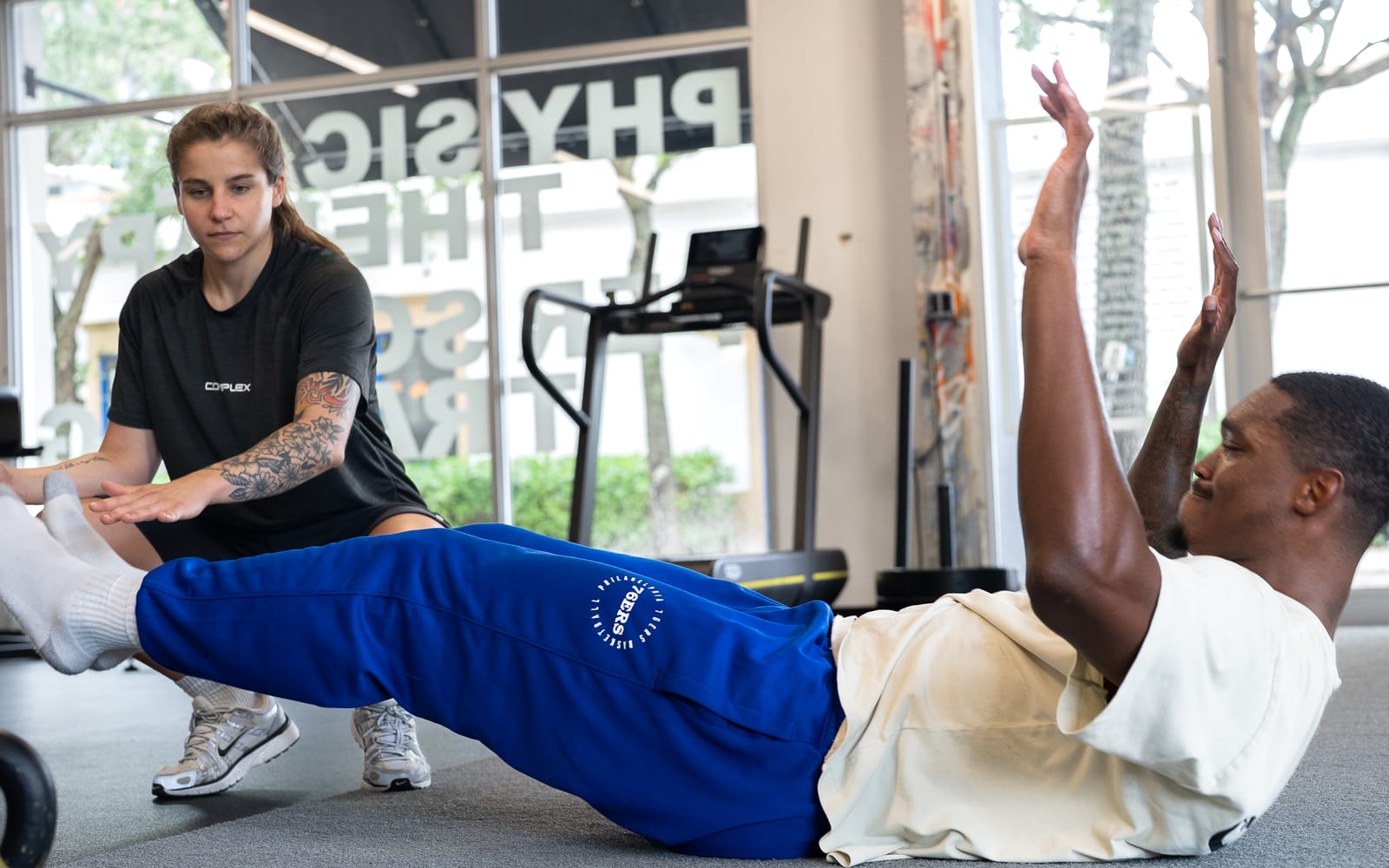
Surgeons often give a timeline like 6–12 months. That is a window, not a green light. Returning purely based on a calendar increases your re-injury risk. Some athletes have the capacity at 8 months; others need well over 12 months. Your ACL return to sport timeline must be criterion-based: you progress when you pass the tests, not when time has passed.
Studies show that athletes who return on time alone (for example, right at exactly 6 months without testing) show drastically higher re-tear rates compared to those who actually met strength and hop criteria. Your body does not know the calendar. It only knows whether you have the capacity to control a cut, absorb a landing, and generate power symmetrically.
The Phases of the ACL Rehab Timeline
Phase 1: Early Protection and Mobility (Weeks 0–6)
- Goals: Protect the graft, restore range of motion, and re-establish quad activation.
- The Work: Weight-bearing is progressed exactly per your surgeon's protocol. Getting full extension early is non-negotiable—if you lose it early, it is significantly harder to fix later and destroys your gait mechanics. I'll say it often in this phase: breathe, control, and prioritize range of motion before anything else.
Phase 2: Strength and Control (Weeks 6–12)
- Goals: Restore quad/hamstring strength, improve single-leg control, and build a base.
- The Work: Weakness here destroys later milestones. Quad strength is a major predictor of readiness. We focus heavily on single-leg work and symmetrical loading. This is an up and down process. You need to remain calm as we build this foundation.
Phase 3: Dynamic Loading and Running (Months 3–6)
- Goals: Introduce running, jumping, and landing only when strength supports it.
- The Work: We do not rush this. Running is introduced when you have good quad strength, control, and zero swelling. We use graded exposure: straight-line running first, then agility. A common pitfall here is skipping the criteria. If you are lacking capacity, we stay here until we build it. Push, but don't force.
Phase 4: Sport-Specific Progressions (Months 6–9+)
- Goals: Build sport-specific demands—change of direction, contact, deceleration.
- The Work: This is where we break out of the sagittal plane. I'll have you load your hip into the frontal plane to build your capacity to control and absorb force, redirect, and generate power when you cut. The ACL return to sport timeline is heavily individualized here.
Phase 5: Return to Sport and Maintenance
Return is cleared when you meet objective criteria. After return, we establish a maintenance plan. Returning doesn’t mean rehab stops. Ongoing progressive loading is how you avoid becoming a statistic in your first year back.
What "Return to Sport" Really Requires: Key Criteria
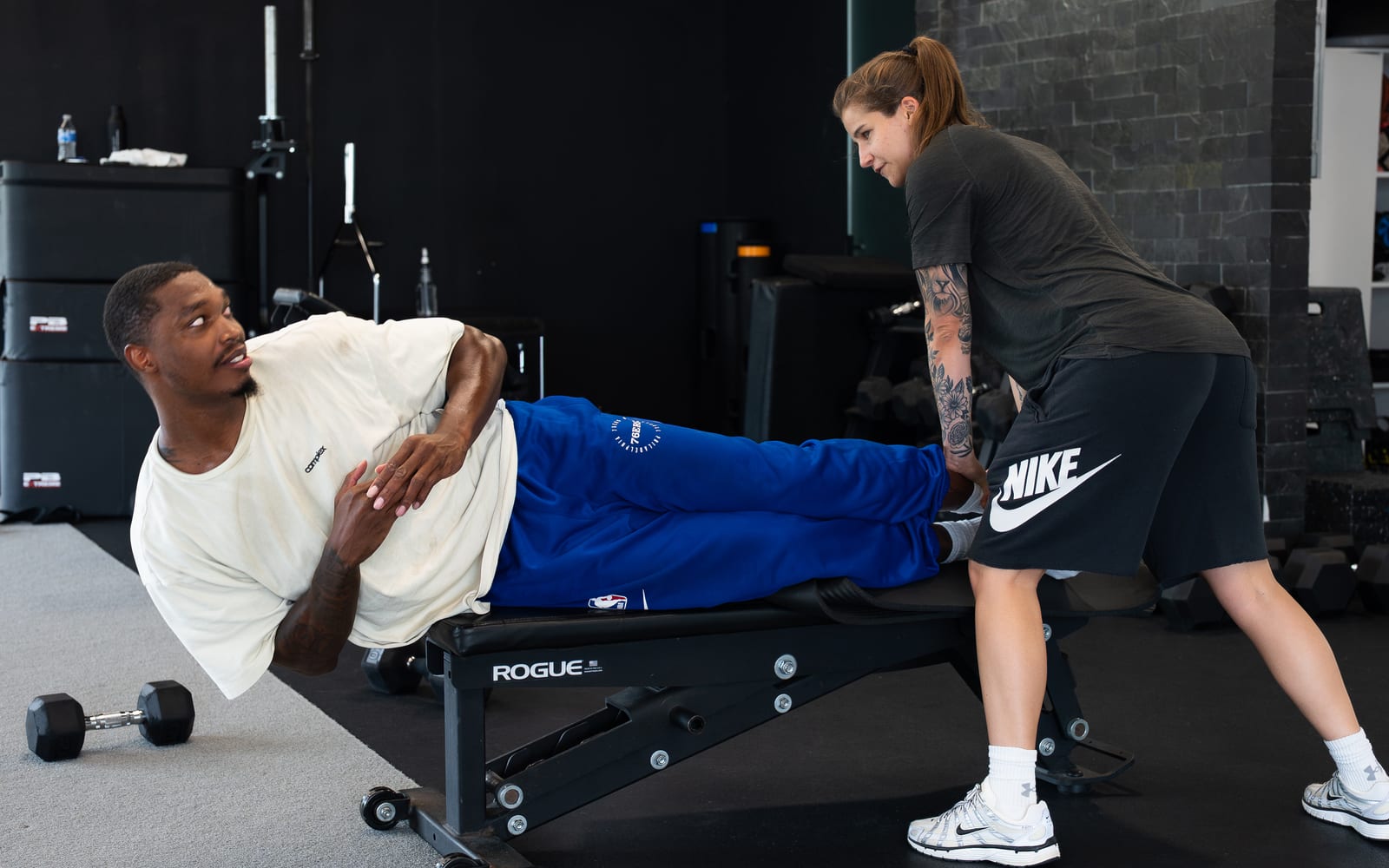
A solid ACL return to sport timeline uses measurable benchmarks, not guesswork.
Strength
- Limb symmetry: Your operated leg strength (quad and hamstring) must be at least 90% of the non-operated leg. For athletes returning to high-risk sports, we look for 95%+.
- Quad strength: Critical for deceleration. Without it, you are putting your graft at immense risk.
Hop and Jump Tests
- Distance and Quality: Single-hop, triple hop, crossover hop. We look for symmetry in distance and, more importantly, strict control. No excessive valgus (knee caving). Stabilize the landing.
Movement Quality
- Single-leg squat: Control without major compensation.
- Change of direction: Symmetrical and completely pain-free.
For a deeper breakdown of these benchmarks, see our return-to-play testing guide.
Readiness and Psychology
Rehab is grueling. Fear of re-injury alters your movement mechanics. We utilize readiness questionnaires and gradual exposure to rebuild your confidence alongside your tissue capacity.
Common Pitfalls That Delay Return
I see the same mistakes repeatedly:
- Ignoring small pains: Thinking a massage gun will solve the problem instead of communicating with your coach.
- Rushing the timeline: Returning to practice just because a date passed.
- Neglecting the non-operated leg: Both sides need progressive loading.
- Training only in the sagittal plane: If you don't build capacity in multiple planes, you will not survive cutting on a court or field.
If pain persists despite following phases, read knee pain after ACL surgery: causes and fixes. For a broader look at what slows recovery, see post-op rehab mistakes.
Every athlete’s ACL return to sport timeline is personal. Focus on passing the criteria, building your capacity, and respecting the process.
Do not leave your return to sport up to chance or arbitrary dates.
Let's get you better. Schedule your sports rehab assessment with Anderson or reach out for details on booking an evaluation.
Ready to Start Your Journey?
Tell us your goals and we'll build a personalized plan to get you moving, stronger, and performing at your best.