

Marathon Training With Niggles: When to Modify vs. Stop
Training for a marathon is a massive undertaking, and let's be honest—it's rare to make it to the start line without feeling something. Whether it's a twinge in your achilles or a dull ache in your hip, these "niggles" can be incredibly stressful. You've put in the miles, and the last thing you want to do is stop.
But here is the good news: You don't always have to stop. In fact, avoiding the pain entirely is often the reason problems linger. My philosophy is that we need to "chase the pain"—targeting it head-on so we can fix the underlying biomechanical issue. Today, we're going to break down the science of when to push through, when to pivot, and when to actually take a seat.
Quick Takeaways for the Injured Runner
- The 6/10 Rule: If your pain is at or below a 6/10 during the run, it is generally safe to continue with modifications.
- Chasing the Pain: Avoiding an area leads to compensation; targeted loading is what actually builds resilience.
- Mobility vs. Stretching: Stretching a "tight" muscle often masks a weakness; true mobility requires active control.
- The Kinetic Chain: Knee pain is rarely a knee problem; look at the mobility of your hips and ankles.
- Train Close to Failure: If you aren't getting "shakey" during your rehab strength sets, you aren't making progress.
Understanding the "Niggle": Is it a Soreness or a Signal?
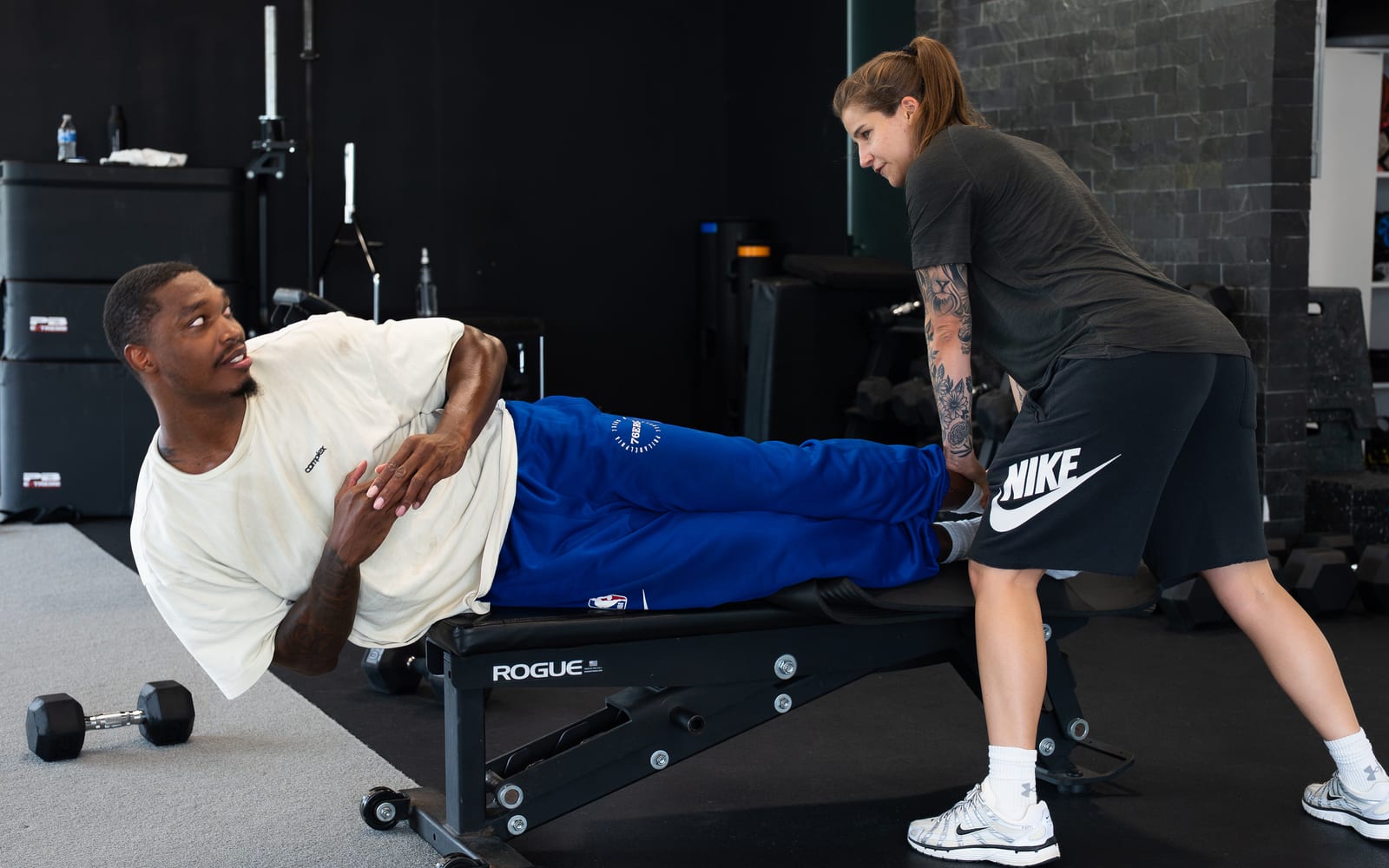
As a runner, you know the difference between "good" tired-muscle soreness and "bad" joint or tendon pain. From a biomechanical perspective, a niggle is often a signal that a specific tissue is being asked to do more than it's currently capable of handling.
We often see runners who try to "rest" away a niggle. They stop for two weeks, the pain disappears, and then it returns the moment they hit mile three of their next run. Why? Because rest doesn't build capacity. To fix the issue, we have to find the threshold where the tissue is challenged but not overwhelmed.
The Michele Smith 6/10 Pain Rule
One of the most common questions I get is, "When can I start running again?" My answer is almost always: as soon as we can manage the load.
We use a simple scale: 0 is no pain, and 10 is "hospital visit" pain. My pain limit is a 6/10. If you are running and your discomfort stays below that 6, we are safe to proceed with the exercise or the run. If you hit a 7 or above, or if you start limping to avoid the pain, that is the signal to stop and modify. We want to work right on the edge of that discomfort to stimulate healing without causing further damage.
Why "Rest" is Often the Wrong Answer
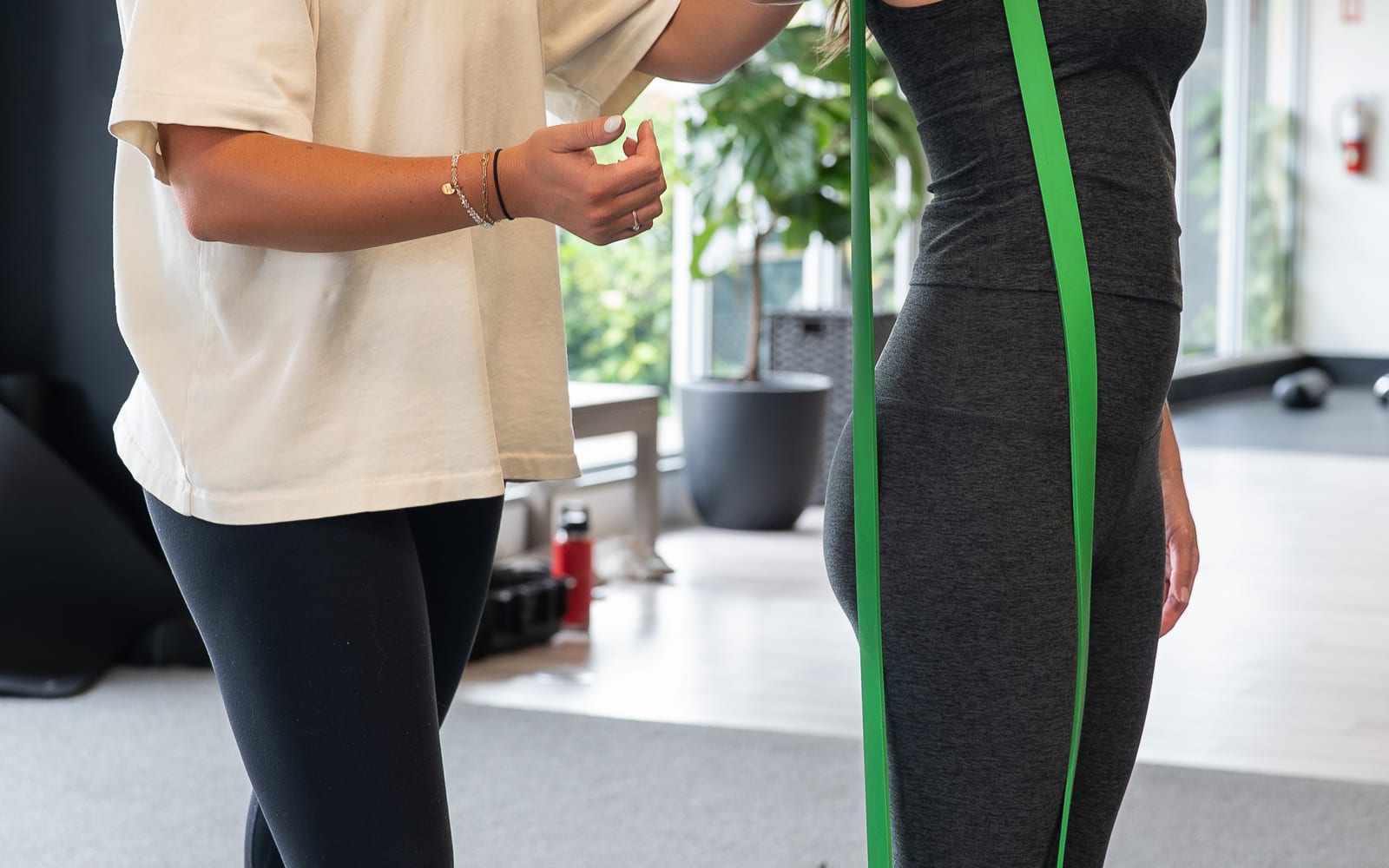
If we aren't chasing the pain, we are avoiding it, and then we cannot fix the problem. Complete rest causes detraining. Your tendons and muscles actually become less capable of handling the impact of running when you do nothing.
Instead of stopping, we modify. This might mean shortening your stride, reducing your pace, or shifting some of your volume to a "mimic" exercise that targets the same muscles without the high-impact load of the pavement.
Stretching vs. Mobility: The Great Marathon Myth
A massive mistake people make is thinking stretching is enough—or that it's the same thing as mobility. If your hamstrings feel "tight" during marathon prep, it's usually because they are overworking to compensate for weak glutes or poor ankle range of motion.
Static stretching just pulls on the tissue; mobility is about having control over your range of motion. We want to do exercises that best mimic the same positions you are in during your sport. For a runner, that means single-leg strength training through a full range of motion.
Single-Leg Supremacy: The Runner's Secret Weapon
Distance running is essentially a series of thousands of single-leg hops. If you aren't training your legs properly through full ROM (Range of Motion) single-leg strength training, you are leaving yourself open to injury.
Movements like Bulgarian Split Squats, Reverse Lunges, and Single-Leg RDLs are non-negotiable. When we perform these, I often ask my clients, "Where do you feel this exercise?" If you don't feel your glutes and quads working hard, we need to adjust your form. And remember: if you are shakey, then you are doing it right. We need to get close to failure on these sets to see actual results in your hypertrophy and endurance.
Decoding the Kinetic Chain: It's Not Your Knee
If you have "Runner's Knee," I can almost guarantee you the problem isn't actually your knee. The knee is a "dumb" joint stuck between the hip and the ankle.
If your ankle lacks dorsiflexion, your knee has to track differently to let you move forward. If your hip isn't utilizing its full range of motion, your knee takes the brunt of the rotational force. We address the niggle by looking up and down the chain. This is why our "homework" usually involves strengthening the hips and improving ankle mobility—this is something I want you doing at home too!
When You Should Actually Stop (The Red Flags)
While I'm an advocate for training through discomfort, there are three clear signs that you need to stop and see a professional immediately:
- Pain at Rest: If your leg throbs while you're just sitting on the couch or trying to sleep.
- Night Pain: Pain that wakes you up or prevents you from falling asleep.
- Limping: If the pain is high enough that you have to alter your gait (limping) to finish a run.
If you hit these points, your body is no longer "signaling"—it's screaming.
Conclusion: Don't Let a Niggle Derail Your Dream
Marathon training is a test of resilience as much as it is a test of fitness. By using the 6/10 rule and focusing on proper muscle activation and single-leg strength, you can navigate most niggles without losing your base.
Remember, we aren't just trying to get to the finish line; we are trying to make you a more capable, stronger athlete for the long haul. Keep your strength sets heavy, keep your mobility active, and keep chasing the pain until it has nowhere left to hide!
Get a professional assessment if you have pain at rest, if your pain is significantly impacting your training schedule, or if a niggle hasn't gone away with a few days of modification. Let's get you back to training ASAP!
Frequently Asked Questions
1. Can I still run if I have a mild ache (3/10 pain)?
Yes! As long as the pain stays below a 6/10 and doesn't cause you to limp, it's actually better to keep moving. We want to maintain your "structural system" and neuromuscular coordination.
2. Is it okay to use Ibuprofen to get through a long run?
I generally advise against it during training. Pain is information. If you mask it with medication, you might push past a safe threshold (the 6/10 rule) without realizing it, turning a small niggle into a major injury.
3. Why do my injuries always seem to happen on one side?
This is common! It usually points to a strength imbalance or a mobility restriction in the "kinetic chain." We use single-leg exercises to expose and fix these asymmetries so your body loads evenly.
4. How much fitness do I lose if I take a week off?
Actually, very little! Studies show that VO2 max and metabolic fitness stay relatively stable for about 10–14 days. However, your "structural" strength (tendons/muscles) can soften quicker, which is why we prefer modification over total rest.
5. What's the best way to "warm up" a niggle before a run?
Active muscle activation! Instead of stretching, do 5–10 minutes of dynamic movements like glute bridges, calf raises, and bird-dogs to "wake up" the muscles and prepare them to support your joints.
References
- Running Physio: How to decide whether to run or rest.
- Journal of Strength and Conditioning Research: Relationship between marathon training, injury and performance.
- VCU Health / Harvard Medical School: Impact of training volume and tapering on marathon performance.
- ASICS Gold Coast Marathon Research: Managing common overuse running niggles.
Dealing with a niggle during marathon training? Book a professional assessment or explore our physical therapy and performance services.
Ready to Start Your Journey?
Tell us your goals and we'll build a personalized plan to get you moving, stronger, and performing at your best.