

Increase Vertical Jump: The Science of Strength and Plyometrics
To most athletes, the vertical jump is a metric of status. To a performance coach, it is a measurable expression of rate of force development (RFD) and the efficiency of the stretch-shortening cycle (SSC). For basketball and volleyball players, jumping higher is not about "trying harder"; it is about optimizing the biological rubber bands within your musculoskeletal system.
If you are currently guessing your way through random plyometric drills or lifting without a structured split, you are likely competing with your sport rather than enhancing it. To see real progress, we must move away from "hype" and toward a structured, periodized approach rooted in sports science.
Quick Takeaways for Vertical Jump Growth
- Assess, Don't Guess: Establish your baseline with objective performance parameters before starting any program.
- The Power Formula: Power = Force × Velocity. You must train both heavy loads (force) and fast movements (velocity).
- Rubber Band Theory: Muscles and tendons act like elastic bands; efficiency comes from the speed of the transition from down to up.
- Structure Matters: A proper weekly split ensures you aren't "flat-footed" or fatigued on game days.
- Health is Performance: Maximum output is impossible if the foundation is compromised by injury or poor recovery.
The Biomechanics of Vertical Displacement
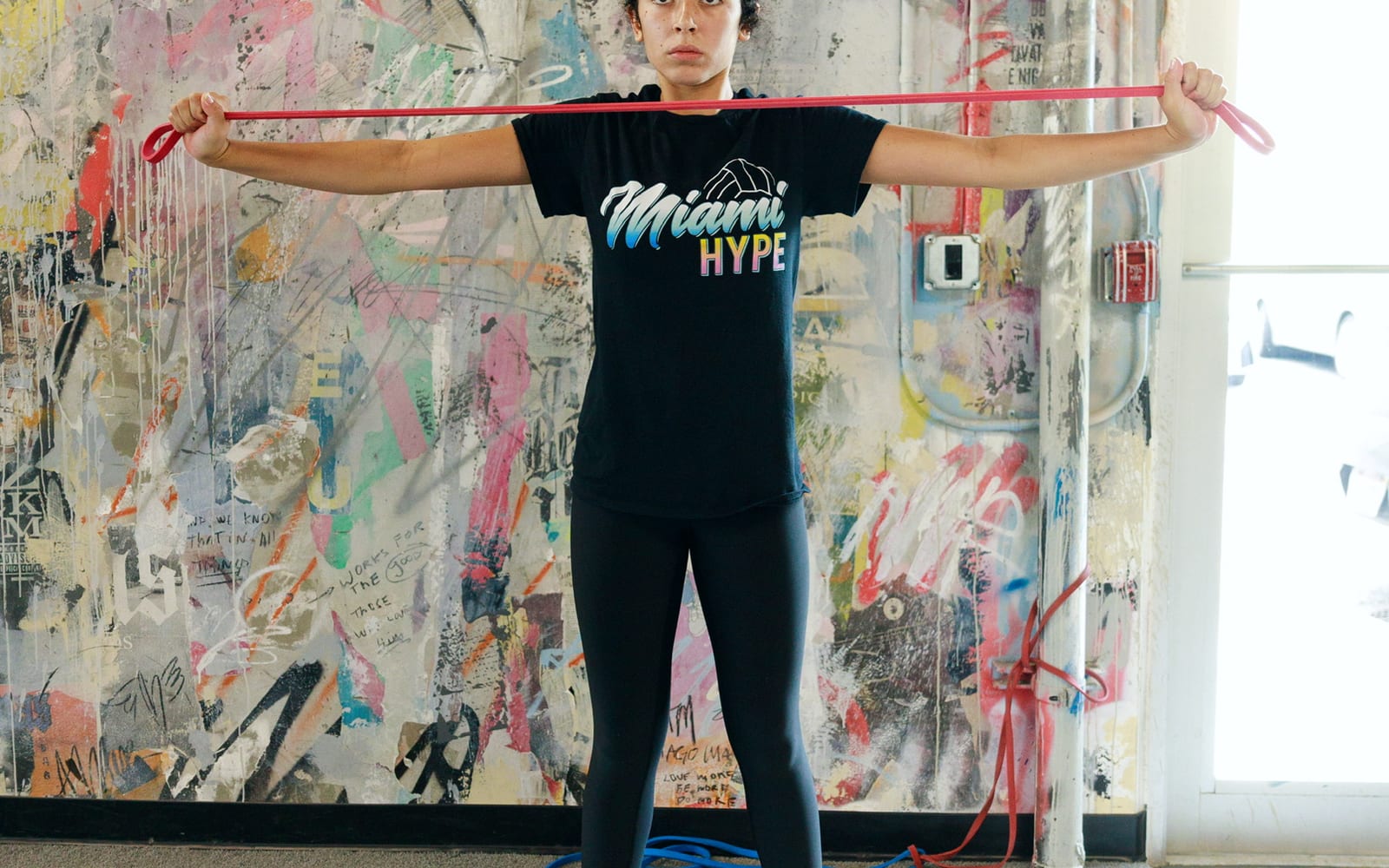
Increasing your vertical jump requires an understanding of eccentric force and how it translates into vertical displacement. When you dip before a jump, you are loading the "rubber band." The faster you can transition from that downward eccentric phase to the upward concentric phase, the more explosive the jump.
We categorize this as the rate of force development. It's not just about how much force you can produce (your max squat), but how much of that force you can "punch the ground away" with in the 0.2 seconds of a jump takeoff.
1. Establishing Performance Parameters: The Assessment Phase
Before we design a split, we must assess. Are you a "force-dominant" jumper or a "velocity-dominant" jumper?
- Force-Dominant: You have a high max squat but struggle with quick, reactive jumps.
- Velocity-Dominant: You are "twitchy" and fast but lack the raw strength to move heavy submaximal loads.
Using objective assessments like the Countermovement Jump (CMJ) versus the Squat Jump (SJ) allows us to identify your "eccentric utilization ratio." If your CMJ is not significantly higher than your SJ, your "rubber bands" are not functioning efficiently. We don't guess; we measure.
2. Strength Foundations: Building the Force Engine

Maximal strength provides the "ceiling" for power. If you cannot squat at least 1.5x your body weight, your primary bottleneck is likely a lack of foundational force production.
Key movements for this phase include:
- Trap Bar Deadlifts: These prioritize a more vertical torso, mimicking jump mechanics while allowing for high loads.
- Rear-Foot Elevated Split Squats: Essential for addressing unilateral asymmetries and building "resilient" knees.
- Goblet Squats: A tool for improving "foundational movement patterns" and ensuring the core is strong and engaged during the descent.
Remember: Training should complement the sport. We are not bodybuilders; we are building capacity for the court.
3. Plyometric Integration: Optimizing the Stretch-Shortening Cycle

Plyometrics are the bridge between weight room strength and court-side bounce. The goal here is to "rebound off the ground" as fast as possible.
We utilize three tiers of plyometrics:
- Extensive Plyometrics: Low-intensity hops (jump rope, line hops) to build tendon "stiffness" and capacity.
- Intensive Plyometrics: Max effort jumps (box jumps, broad jumps) focusing on maximum intent.
- Shock Training: Depth jumps where you drop from a box and "get down and back up as fast as you can." This is the ultimate tool for improving RFD.
4. The Weekly Split: How to Structure Your Workouts
A common mistake is training "hard" every day. This drains the Central Nervous System (CNS) and leads to diminished returns. We use a High/Low Split to ensure recovery.
The Vertical Jump Protocol Split:
- Monday (High CNS): Speed work and Max Effort Plyometrics. Focus on "driving up fast."
- Tuesday (Low CNS): Upper body strength and mobility. We are building "resiliency" here.
- Wednesday (Rest/Recovery): Total recovery or light active mobility.
- Thursday (High CNS): Force development. Heavy bilateral lifts (Squats/Deadlifts) followed by contrast plyometrics.
- Friday (Low CNS): Accessory work and "foundational movement" stability.
- Saturday/Sunday: Sport-specific play or rest.
5. Recovery: The Invisible Training Session
If your recovery habits are terrible, your vertical jump will plateau. Muscles don't grow during the workout; they grow during sleep and down-regulation. We monitor "performance parameters" daily. If your vertical drop is more than 10% from your baseline, you are in a state of overreaching. Health = Performance.
Conclusion

Increasing your vertical jump is a clinical process of improving force production and elastic efficiency. Stop looking for "hacks" and start looking at your data. If you don't know your current jump height, your max squat, or your weekly volume, you aren't training—you're exercising.
Book your full performance evaluation today. If you don't know how to plan your training, are stuck in your goals, or are struggling to stay injury-free, we'll build a structure that actually works.
Frequently Asked Questions
How long does it take to see vertical jump gains?
Initial gains often come from "neural adaptations" (the brain learning to recruit more muscle) within 3–4 weeks. Structural changes in the tendons and muscles take 8–12 weeks of consistent periodization.
Can I do plyometrics every day?
No. High-intensity plyometrics are taxing on the CNS and connective tissues. Limit "intensive" sessions to 2–3 times per week to avoid patellar tendonitis and ensure you can still "punch the ground" with maximum intent.
Do I need to lift heavy to jump high?
Strength is the foundation of power. While some "natural" athletes jump high without lifting, they often hit a plateau early. Increasing your "submaximal load" capacity allows you to produce more force in less time.
Are box jumps enough?
Box jumps primarily train the "upward" phase and landing. To truly increase vertical, you need "depth jumps" and "reactive jumps" that train the "downward" eccentric phase and the transition speed.
What is the "Rubber Band" analogy?
Think of your muscles as rubber bands. A thick, strong band (strength) that you can stretch and release instantly (velocity) will fly further than a thin band or one that is stretched slowly.
References
- USAB.com: The Science Behind Your Vertical Leap.
- PubMed: Training methods to improve vertical jump performance (2013).
- SimpliFaster: The Impact of Specific Variability in Plyometric Workouts.
- Journal of Sports Science: Eccentric Utilization Ratio in Elite Athletes.
Ready to jump higher? Book a performance evaluation or explore our physical therapy and performance services.
Ready to Start Your Journey?
Tell us your goals and we'll build a personalized plan to get you moving, stronger, and performing at your best.