

Fix Low Back Tightness After Lifts
Let's set the record straight right out of the gate: walking out of the gym feeling like your lower back is made of set concrete is not a badge of honor. As a coach, I see it every single day. Lifters hit a heavy pull session, drop the barbell, and immediately start doing that awkward hands-on-knees waddle to the water fountain. If you are constantly battling low back tightness after deadlift sessions, your body is flashing a warning light on your dashboard.
You might think it's just a "crazy back pump," but there is a massive difference between a muscle effectively doing its job and a muscle screaming for help because you compromised your mechanics. When you rely entirely on your lumbar spine to move heavy iron, you are playing a dangerous game of structural roulette.
This guide isn't about tossing a band-aid on the problem with a foam roller and some generic stretching. We are going to break down the tape, look at the underlying biomechanics, and implement real-time coaching cues. By the end of this read, you will have the exact strategies needed to banish low back tightness after deadlift workouts for good, reclaim your mobility, and finally pull with the power your posterior chain was designed to produce.
The Reality of Low Back Tightness After Deadlift

Experiencing low back tightness after deadlift training is so common that many gym-goers accept it as the unavoidable tax for lifting heavy. But pain and extreme stiffness are not prerequisites for getting stronger. To fix the issue, we first have to understand what is physically happening under the bar. When you deadlift, your body manages massive amounts of shear and compressive forces. If your skeleton isn't stacked correctly, your musculature has to work overtime to prevent your spine from snapping like a dry twig.
Anatomy of the Hip Hinge
The deadlift is, at its core, a hip hinge. It is a harmonious symphony of the hamstrings, glutes, and core working together to extend the hips while the spine remains in a rigid, neutral position. According to Dr. Stuart McGill, a leading expert in spinal biomechanics, the spine is designed to bear heavy loads when it is maintained in its natural, neutral curvature (McGill, 2015).
When you lose that neutrality—even slightly—the mechanical load shifts drastically. Instead of your massive gluteus maximus driving the movement, the smaller, stabilizing muscles of your lower back take the brunt of the load. This is the primary catalyst for low back tightness after deadlift sessions.
Erector Spinae Overdrive vs. Glute Activation
Your erector spinae are the long muscles running up the sides of your spine. Their primary job during a deadlift is isometric—meaning they are supposed to lock the spine in place, not actively flex and extend it to move the weight. If your glutes and hamstrings are "asleep at the wheel" due to poor setup or sedentary lifestyle habits, your erectors go into overdrive.
This leads to a massive accumulation of metabolic waste (the "pump") and micro-tearing in muscles that weren't built to be the primary movers. A study in the Journal of Strength and Conditioning Research highlights that excessive lumbar flexion during lifting exponentially increases the shear force on the L4/L5 spinal discs, triggering intense muscular guarding and stiffness post-workout (Schoenfeld, 2010). If you want to stop low back tightness after deadlift workouts, you have to stop turning your deadlift into a lower back extension.
Top Coaching Fixes for Low Back Tightness After Deadlift
Now that we know why your back feels like a rusted hinge, let's talk application. As a coach, I don't care how much weight is on the bar if your execution is trash. Fixing low back tightness after deadlift sets requires dialing in your setup before the barbell ever leaves the floor. Here are the immediate coaching fixes you need to apply today.
Perfecting Your Starting Position
A failed deadlift—and the resulting lower back pain—almost always starts before the concentric pull even begins. If you set up with your hips too high or too low, you immediately misalign your leverage points. You need to create tension. You should feel uncomfortable in the bottom position of a deadlift because you are coiled like a spring, ready to release energy.
When you approach the bar, the barbell should be directly over your mid-foot. From there, hinge at the hips until you can grab the bar, then bend your knees until your shins touch the steel. Do not push the bar away.
Hip Height and Shin Angle Mechanics
If your hips are too low, you turn the deadlift into a squat, which pushes your knees forward, alters your shin angle, and drastically reduces hamstring recruitment. If your hips are too high, your hamstrings are already fully stretched, leaving your lower back to do all the heavy lifting. Both errors lead directly to severe low back tightness after deadlift sets.
Your shins should be relatively vertical, and your armpits should be directly positioned over the barbell. Next, pull your chest up and squeeze your lats as if you are trying to crush oranges in your armpits. This action, known as "pulling the slack out of the bar," engages the latissimus dorsi to stabilize the thoracic spine, creating a rigid kinetic chain that protects the lumbar region.
Mastering the 360-Degree Brace
"Tighten your core" is the most misunderstood coaching cue in the fitness industry. Most lifters hear this and simply suck their stomach in. That is the exact opposite of what you need to do. To eliminate low back tightness after deadlift routines, you must learn to brace 360 degrees around your spine.
Intra-Abdominal Pressure (IAP) Explained
Think of your torso as an empty soda can. If it's empty and you press down on it, it crushes easily. But if it's full of carbonated liquid and sealed tight, you can stand on it without it breaking. This is Intra-Abdominal Pressure (IAP).
Before you initiate the pull, take a deep, diaphragmatic breath down into your belly, expanding your stomach outward against your lifting belt (or imaginary belt). But don't just push forward—push outward into your obliques and backward into your lower back. The National Strength and Conditioning Association (NSCA) emphasizes that a proper Valsalva maneuver during heavy lifts dramatically increases IAP, effectively creating a rigid fluid ball that supports the vertebral column and prevents the erectors from bearing isolated stress (Haff & Triplett, 2015). This single technique is the ultimate cure for low back tightness after deadlift issues.
Post-Workout Recovery for Low Back Tightness After Deadlift
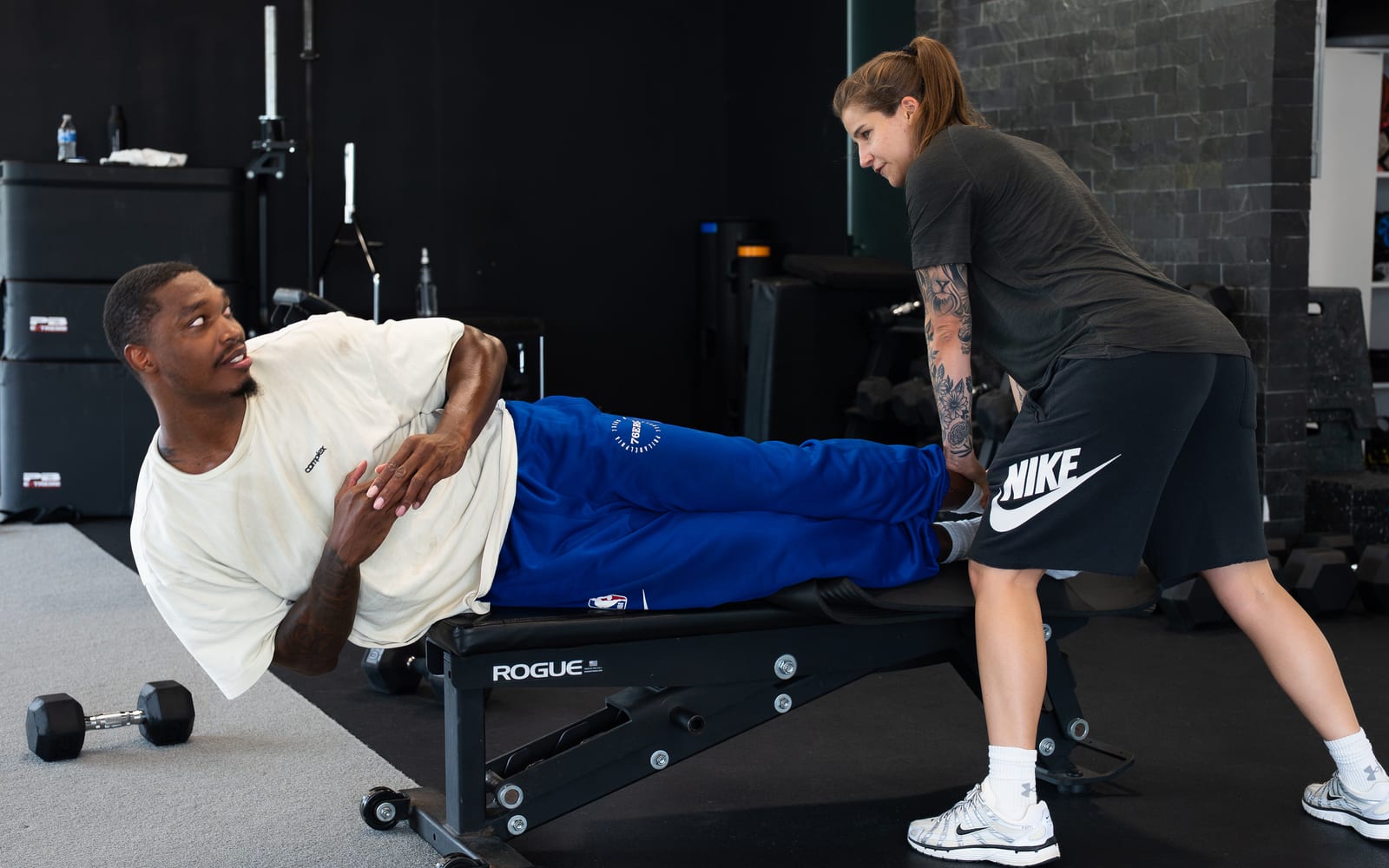
Even with perfect form, pushing your limits will occasionally result in some residual fatigue. However, how you handle your body after the barbell is stripped dictates whether you recover quickly or suffer for days.
Spinal Decompression and Active Mobility
Total rest is the enemy of recovery. If you sit on the couch for two days following a heavy session, your inflamed muscles will shorten, tighten, and lock up. Instead, you need active recovery and spinal decompression to flush out the accumulated metabolites and restore tissue length.
To mitigate low back tightness after deadlift sessions, spend 5 to 10 minutes post-workout decompressing the spine. Hang freely from a pull-up bar for 30–45 seconds at a time. This allows gravity to gently pull the vertebrae apart, giving the compressed discs a chance to rehydrate and the erector muscles a chance to release their isometric death grip.
The Cat-Cow and 90/90 Breathing Techniques
Follow up your hangs with dynamic, unloaded movement. The Cat-Cow stretch is phenomenal for this. Get on your hands and knees, and slowly transition between global spinal flexion (pulling your back to the ceiling) and global spinal extension (dropping your belly to the floor). Do this for 15–20 slow reps.
Finally, finish with 90/90 breathing. Lie on your back with your feet elevated on a bench so your hips and knees are at 90-degree angles. Rest your hands on your ribs and take deep, slow breaths. This position neutralizes the pelvis, shuts down the hyperactive erector spinae, and forces the parasympathetic nervous system to kick in, essentially telling your brain that the heavy lifting is over and it's safe to relax. This protocol will drastically reduce your low back tightness after deadlift days.
Quick Takeaways
- Form over Ego: The most common cause of low back tightness after deadlift training is prioritizing heavy weight over a neutral spinal alignment.
- Pull the Slack: Engage your lats by trying to "bend the bar" around your shins before you initiate the upward pull.
- Wedge Your Hips: Ensure your hips aren't too low (turning it into a squat) or too high (turning it into a stiff-legged back extension).
- Brace 360 Degrees: Do not suck your stomach in. Breathe deeply into your belly and push outward in all directions to create Intra-Abdominal Pressure (IAP).
- Engage the Glutes: Your glutes and hamstrings should be the primary movers; if they are weak, your lower back will take over and suffer.
- Decompress Post-Lift: Hang from a pull-up bar to alleviate spinal compression immediately after your session.
- Active Recovery: Use movements like the Cat-Cow and 90/90 breathing to down-regulate your nervous system and prevent stiffness.
Conclusion
At the end of the day, dealing with extreme low back tightness after deadlift sessions is a symptom of a mechanical breakdown, not an inevitable reality of lifting weights. As a lifter, your body is a machine, and your mechanics dictate your longevity. By dialing in your hip hinge, taking the time to set up properly, and mastering the 360-degree core brace, you shift the massive load of the deadlift away from your fragile lower back and onto the powerful musculature of your posterior chain.
Don't let ego dictate your programming. Strip the weight back, record your sets, and be brutally honest with yourself about your form. Implement the active recovery and decompression tactics we discussed, and you will notice a massive difference in how you feel walking out of the gym.
If you are tired of your progress being derailed by nagging back stiffness, it's time to take your mechanics seriously. Start your performance plan or explore our physical therapy and performance services—we can help you pull with confidence and without paying for it in your lower back.
Frequently Asked Questions (FAQs)
1. Is it normal to have low back tightness after deadlift workouts?
A mild sense of fatigue in the lower back is normal, as the erector spinae act as stabilizers during the movement. However, intense, debilitating low back tightness after deadlift workouts indicates a mechanical flaw, usually a loss of a neutral spine or poor glute activation.
2. Should I wear a lifting belt to stop my back from hurting?
A lifting belt is a great tool to enhance Intra-Abdominal Pressure (IAP), but it is not a crutch for poor form. If you do not know how to brace properly without a belt, wearing one will not fix your lower back tightness. Learn to brace your core first, then add the belt for heavy sets.
3. How do I know if my tightness is actually an injury?
Muscle tightness generally feels like a dull, widespread ache that improves with light movement and stretching. If you experience sharp, shooting pain, numbness down your legs, or pain that worsens with specific movements, stop lifting immediately and consult a physical therapist or medical professional.
4. Will stretching my hamstrings help my lower back?
Yes, tight hamstrings can absolutely contribute to lower back issues. If your hamstrings are overly tight, they can pull your pelvis into a posterior tilt at the bottom of the deadlift, forcing your lower back to round. Improving hamstring flexibility helps maintain a neutral spine.
5. What is the best alternative to conventional deadlifts if my back still hurts?
If conventional deadlifts continue to trigger severe tightness, consider switching to the trap bar (hex bar) deadlift. The trap bar shifts the center of gravity to align more directly with your center of mass, allowing for a more upright torso and significantly less shear force on the lumbar spine.
References
- McGill, S. (2015). Back Mechanic: The Step-by-step McGill Method to Fix Back Pain. Backfitpro Inc.
- Schoenfeld, B. J. (2010). Squatting Kinematics and Kinetics and Their Application to Exercise Performance. Journal of Strength and Conditioning Research, 24(12), 3497–3506.
- Haff, G. G., & Triplett, N. T. (2015). Essentials of Strength Training and Conditioning (4th ed.). National Strength and Conditioning Association (NSCA), Human Kinetics.
Struggling with low back tightness after deadlift sessions? Start your performance plan or explore our physical therapy and performance offerings to dial in your mechanics.
Ready to Start Your Journey?
Tell us your goals and we'll build a personalized plan to get you moving, stronger, and performing at your best.