

Dry Needling for Athletes: When It Helps (and When It's a Waste)
Passive therapy alone will never return you to the field. If you're an athlete looking for a shortcut to "fix" an injury without putting in the work, you're in the wrong place. However, if you are looking for a precision tool to clear the path for high-level loading, dry needling is one of the most effective options we have.
Rehab is an up-and-down process. One day you're sprinting; the next, a flare-up in your hamstring has you second-guessing your entire season. In my practice, I see athletes who have spent months "resting" or using massage guns on surface-level tightness without addressing the deep myofascial trigger points that are actually bottlenecking their performance. Dry needling isn't about "relaxing"—it's about deactivating the neuromuscular "noise" that prevents your muscles from absorbing and generating force.
This guide breaks down exactly where dry needling fits into a smart plan of care and, more importantly, when you're just wasting your time.
Quick Takeaways
- Targeted Reset: Dry needling deactivates trigger points to restore muscle length and function.
- Beyond the Surface: It reaches deep tissue that manual therapy and massage guns cannot impact.
- Neuromuscular Benefit: It "reboots" the connection between the brain and the muscle for better activation.
- A Means to an End: Needling is a tool to open a "window of opportunity" for progressive loading.
- Not a Cure-All: Without follow-up strength work, the benefits are temporary and largely a waste.
The Mechanism: Why a Needle Succeeds Where Your Hands Fail
Traditional massage and manual therapy have their place, but they are "outside-in" approaches. They work on the superficial layers of fascia and muscle. Dry needling is an "inside-out" intervention.
When we insert a thin, sterile monofilament needle into a myofascial trigger point—a hyper-irritable spot in a taut band of muscle—we are looking for a Local Twitch Response (LTR). This involuntary contraction is a sign that the needle has physically disrupted the dysfunctional knot. Research published in The Journal of Orthopaedic & Sports Physical Therapy suggests that this reset helps normalize the chemical environment around the nerve endings, reducing "substance P" and other inflammatory markers (Dunning et al., 2014).
For a runner with chronic calf tightness or a baseball player with a "pinched" feeling in their shoulder, this isn't just about feeling better. It's about restoring the muscle's ability to lengthen. If the muscle can't lengthen, it can't absorb load. If it can't absorb load, it breaks.
Building Your Capacity Through Progressive Overload
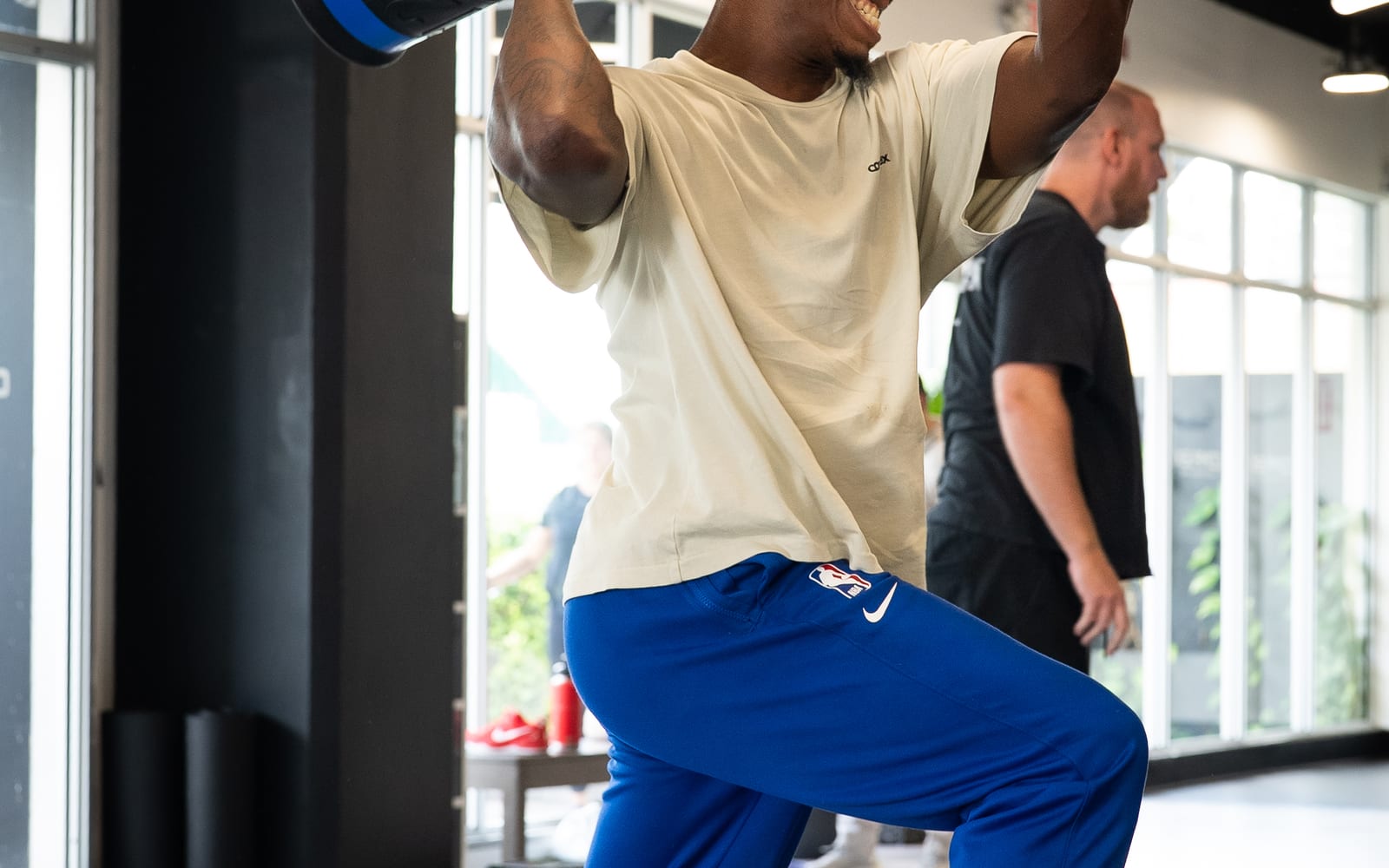
I tell my clients this every day: building your capacity through progressive overload is the only way to stay on the court. Dry needling is simply the mechanic that clears the debris so you can actually drive the car.
Many athletes make the mistake of getting needled, feeling a 20% reduction in pain, and immediately going out to PR their back squat. That is how you end up back in my office three days later. The needle creates a window of decreased pain and increased range of motion. We must use that window to load. DRIVE the movement, stabilize the joint, and control the descent. If you don't load the tissue after the needle, the trigger point will simply return as your body reverts to its compensatory patterns.
When Dry Needling is a Waste of Time
If you are coming in for dry needling every week for the same "tightness" without a corresponding strength program, you are wasting your money.
Dry needling is a waste when:
- It's used as a standalone treatment: If there's no plan of care involving loading, you're just chasing symptoms.
- You ignore the sagittal plane bias: If you only needle the muscles used for forward movement (quads, hamstrings) but ignore the lateral stabilizers needed for cutting and pivoting, you aren't addressing the athlete's actual limitations.
- The injury is purely structural: A needle cannot fix a grade III ligament tear or a fractured bone. It manages the muscular compensations around those injuries, but it won't "heal" the structural break.
Research and Efficacy: What the Data Says
The clinical edge of dry needling is backed by more than just "vibe checks." A 2021 systematic review in Physical Therapy in Sport found that dry needling significantly improved pain and disability in athletes with overhead shoulder injuries (Ceballos-Laita et al., 2021).
Furthermore, for those dealing with chronic low back pain or hip impingement, needling the deeper stabilizers—like the multifidi or the piriformis—provides a level of neuromuscular modulation that surface-level modalities simply cannot reach. We aren't guessing; we are targeting specific anatomical structures to change how the brain perceives threat.
Common Athlete Questions
How soon until I'm better?
Rehab is an up-and-down process. You might feel immediate relief after one session, or you might feel "muscle soreness" (similar to a heavy lifting session) for 24–48 hours. Most athletes see significant functional shifts within 3 to 5 sessions, provided they are consistent with their loading protocol. Remain calm and follow the plan.
What do I need to do on my own?
You need to move. I will give you specific directives: Control the eccentric portion of your lifts. Stabilize your core during your warm-ups. The "homework" isn't optional; it's the actual rehab. The needle just makes the homework possible.
Can I return to my activity yet?
Not until you've demonstrated the capacity to handle the specific demands of your sport. If you can't absorb force in a controlled environment, I'm not sending you out to do it in a chaotic game environment. We will test your movement quality, not just your pain levels.
Conclusion: Respect the Process
Dry needling is a powerful adjunct to a comprehensive rehab strategy. It helps us bypass the superficial noise and address the deep, muscular limitations that hold you back from peak performance. But remember: a needle is not a substitute for strength.
You cannot ignore small pains until they become season-ending issues. If you are feeling "stuck" in your current recovery, it's time to move beyond passive table work and start rebuilding your capacity. See what that looks like in practice in our strength-based PT first four sessions guide, and avoid the post-op rehab mistakes that keep athletes on the table instead of on the field.
FAQs
1. Is dry needling the same as acupuncture?
No. While they use the same tools, the philosophy is different. Acupuncture is based on traditional Chinese medicine and meridians. Dry needling is based on Western neuroanatomy and the modern understanding of trigger points and musculoskeletal dysfunction.
2. Does dry needling hurt?
You won't feel the needle enter the skin. You will feel the "twitch response," which can feel like a deep cramp or a dull ache. It's a session directive: Breathe through it. That sensation is the sign that the reset is happening.
3. Can I workout after a session?
Generally, yes, but we usually recommend light, active recovery or "movement prep" rather than a max-effort session. We want to reinforce the new range of motion without overloading the fatigued tissue immediately.
4. How many needles do you use?
It depends on your limitations. We might use two needles to target a specific hip flexor, or several along the spine to address a "plan of care" for chronic back pain. We target what is necessary to get you moving.
5. Why not just use a massage gun?
A massage gun is great for temporary blood flow and surface-level desensitization. It cannot reach the deep trigger points in the hip or shoulder that require the precision of a monofilament needle.
References
- Dunning, J., et al. (2014). "Dry needling: a literature review with implications for clinical practice guidelines." Physical Therapy Reviews.
- Ceballos-Laita, L., et al. (2021). "The effectiveness of dry needling in the management of overhead athletes with shoulder pain: A systematic review." Physical Therapy in Sport.
- Butts, R., et al. (2016). "Dry Needling: A Proposed Strategy for Athletes with High Load and Overuse Injuries." International Journal of Sports Physical Therapy.
Let's get you better. Schedule your sports rehab assessment with Anderson or reach out for details on booking an evaluation.
Ready to Start Your Journey?
Tell us your goals and we'll build a personalized plan to get you moving, stronger, and performing at your best.