

The 6-Minute Warm-Up System for Any Sport
If your warm-up is three arm circles, one toe touch, and a prayer, we need to talk. Athletes love to skip warm-ups because they feel boring. Then the first sprint, jump, cut, or heavy lift feels like opening a rusty garage door. Suddenly the warm-up does not seem so optional.
A good warm-up does not need to take 30 minutes. It needs to prepare the body for the job. That means raising temperature, unlocking the positions you need, waking up stabilizers, and rehearsing the patterns you are about to use.
This best warm up for athletes is a six-minute system you can use before almost any sport or training session. It is short enough that you cannot make excuses, and complete enough that your body knows what is coming. Let's get it.
Why Dynamic Warm-Ups Work

Dynamic warm-ups prepare the musculoskeletal, neurological, and cardiovascular systems for activity. Research has shown that dynamic stretching and neuromuscular warm-up strategies can improve explosive performance and reduce lower-limb injury risk when used consistently.
Static stretching is not evil. It just has a time and place. If you are about to sprint, jump, lift, or compete, long passive holds are usually not the main event. You need movement, rhythm, coordination, and progressive intensity.
The goal is simple: by the end of six minutes, you should feel warmer, sharper, and more connected. Not exhausted. If your warm-up feels like a workout, someone got excited and lost the plot.
The 6-Minute System
Use this flow:
- Minute 1: Raise temperature
- Minute 2: Open key joints
- Minute 3: Activate hips and trunk
- Minute 4: Build single-leg control
- Minute 5: Add elastic movement
- Minute 6: Rehearse sport speed
That is the order. We are doing this simply because it's best for your function, but also because it's what I chose. You are welcome.
Minute 1: Raise Temperature
Start with easy movement that increases blood flow:
- Light jog
- Jump rope
- Bike
- Lateral shuffle
- Marching with arm drive
You should finish this minute breathing slightly harder, not gasping like you just chased a bus.
Minute 2: Open Key Joints

Now hit the joints that tend to steal movement from everywhere else:
- Ankle rocks
- Hip circles
- World's greatest stretch
- Thoracic rotations
- Arm sweeps
For field and court athletes, ankles, hips, and thoracic spine matter a lot. If those areas do not move, your knee, low back, or shoulder will try to cover for them. That is how small problems become recurring problems.
If you have not screened those areas yet, start with our injury prevention screening blueprint. A warm-up is better when it is built around what your body actually needs.
Minute 3: Activate Hips and Trunk

This is where we ask the stabilizers to clock in:
- Glute bridge march
- Dead bug
- Side plank lift-off
- Mini-band lateral walk
- Tall-kneeling press-out
Do not rush these. Activation work is not about speed. It is about clean positions and control. If you are wobbling, arching, or holding your breath, slow down and own the rep.
Minute 4: Build Single-Leg Control
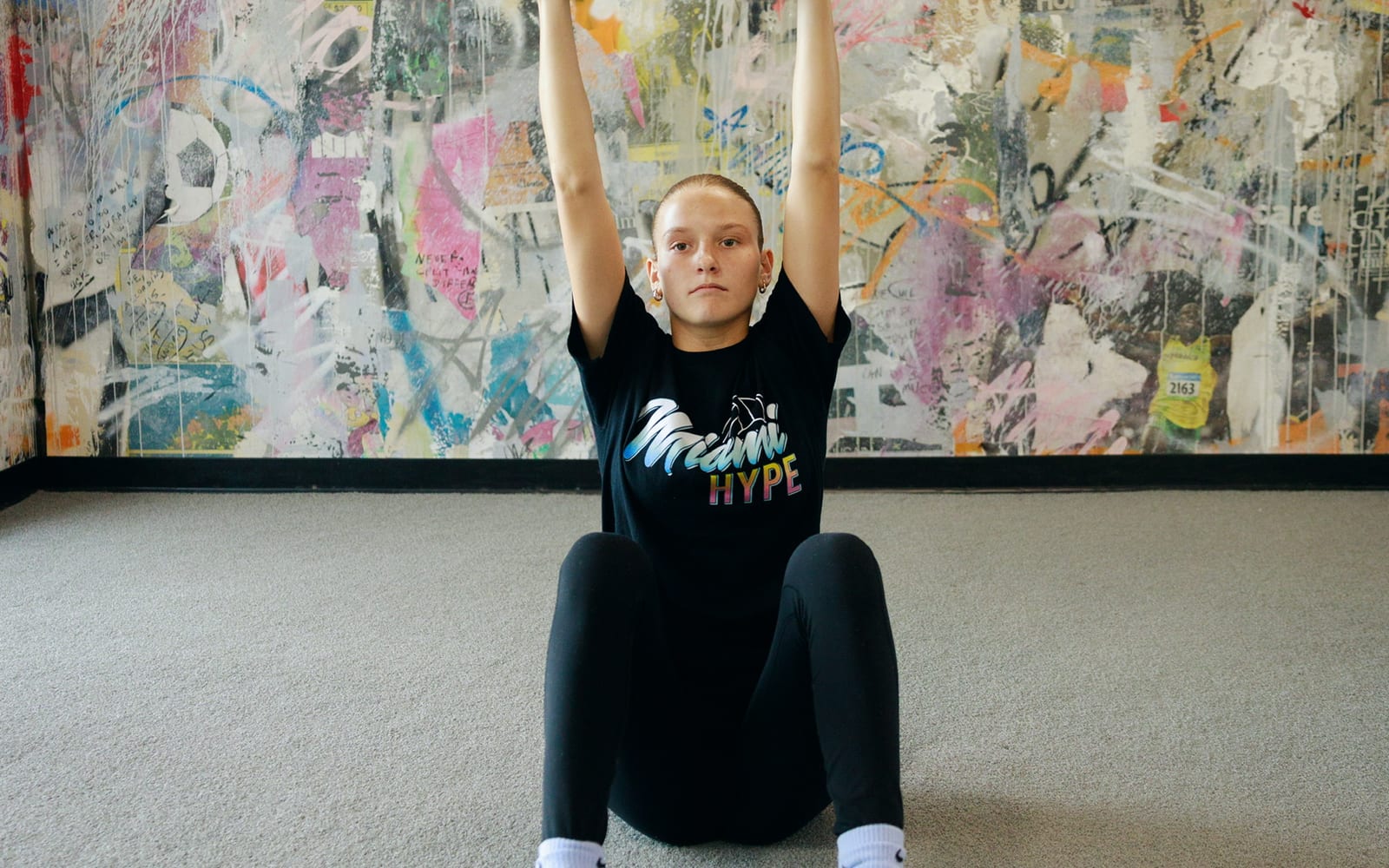
Most sports happen on one leg at a time. Running, cutting, landing, changing direction, throwing, and even decelerating require single-leg control.
Use:
- Reverse lunge to knee drive
- Single-leg RDL reach
- Step-downs
- Lateral lunge
- Skater step and stick
The goal is control without drama. Knee tracks over foot. Pelvis stays level. Chest stays organized. If your warm-up exposes a big asymmetry, that is information. Do not ignore it and then act shocked when one side keeps barking.
Minute 5: Add Elastic Movement
Now we introduce spring:
- Pogos
- Line hops
- A-skips
- Low amplitude bounds
- Quick-feet drills
Keep the contacts light and snappy. You are telling the tendons, calves, feet, and nervous system to get ready. This is especially useful before sprinting, basketball, soccer, tennis, pickleball, and lifting days with power work.
If you have been getting hurt after sudden spikes in intensity, pair this with better load management. Warm-ups help, but they cannot erase a reckless training week.
Minute 6: Rehearse Sport Speed
Finish with the pattern you are about to use:
- Two short accelerations for field sports
- Two approach jumps for volleyball or basketball
- Two shadow swings for tennis or baseball
- Two technique sets before heavy lifting
- Two controlled cuts for court sports
This is the bridge between general prep and performance. You want your first real rep to feel familiar, not like your body just got ambushed.
When Six Minutes Is Not Enough
Six minutes is the minimum effective dose. If you are coming back from injury, training in cold weather, preparing for a high-intensity session, or dealing with a specific limitation, take more time.
A personalized plan of care may add extra shoulder control, hip mobility, landing work, sprint drills, or strength prep. The individual approach matters. A swimmer, lifter, runner, and soccer player should not all warm up the exact same way forever. That is cookie-cutter nonsense, and we do not do nonsense.
Quick Takeaways
- A warm-up should prepare the body for the exact session ahead.
- Dynamic warm-ups are usually better than long static holds before explosive work.
- Six focused minutes can cover temperature, mobility, activation, control, elasticity, and sport rehearsal.
- Single-leg control belongs in almost every athlete's warm-up.
- Warm-ups should feel energizing, not exhausting.
- The best warm-up is consistent and specific.
FAQs
1. Should I stretch before sports?
Use dynamic mobility first. Save long static holds for later unless a specific limitation needs targeted work.
2. Is six minutes really enough?
For many athletes, yes. It is the minimum. If you are injured, stiff, or preparing for high intensity, extend it.
3. What if I only lift weights?
Still warm up. Use joint mobility, activation, and ramp-up sets that match the lift.
4. Should kids warm up the same way?
The structure can be similar, but keep it playful and skill-based. Youth athletes need quality movement, not military drills.
5. Can this prevent every injury?
No warm-up can promise that. But consistent neuromuscular prep reduces risk and improves readiness.
References
- Herman, K., et al. (2012). "The effectiveness of neuromuscular warm-up strategies for preventing lower limb injuries during sports participation." BMC Medicine.
- Wang, Y., et al. (2023). "Effects of different warm-up methods on lower limb explosive strength." BMC Sports Science, Medicine and Rehabilitation.
- Herman, D. C., et al. (2025). "Dynamic Warm-ups Play Pivotal Role in Athletic Performance and Injury Prevention." Current Reviews in Musculoskeletal Medicine.
- Fradkin, A. J., et al. (2010). "Effects of warming-up on physical performance." Journal of Strength and Conditioning Research.
Let's get you better. Dial in your warm-up system with Jawanza or book a session so your warm-up finally matches the way you train and compete.
Ready to Start Your Journey?
Tell us your goals and we'll build a personalized plan to get you moving, stronger, and performing at your best.