

Movement Quality Before More Weight: The Rehab-to-Performance Rule
More weight is easy to chase. Better movement is harder to fake.
If your knee caves, your ribs flare, or your shoulder shrugs every rep, loading that pattern just teaches your body to get stronger at compensating. That works until it does not. Putting movement quality before more weight is the simplest rule we know for protecting joints and building strength that lasts, and it applies whether you are rehabbing or just training hard.
What Movement Quality Actually Means
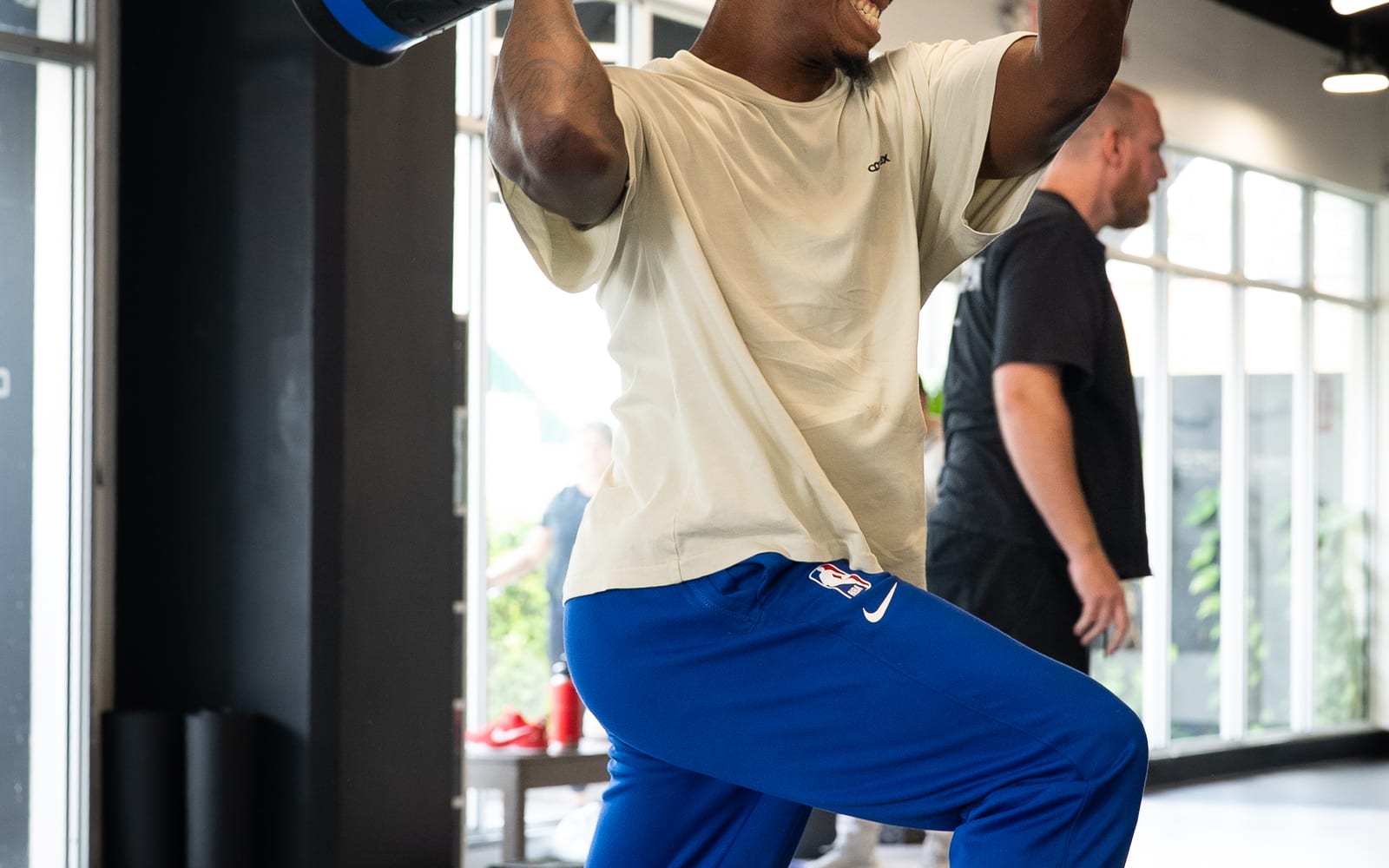
It is not aesthetics. It is control:
- Joints stacked under load
- Force going where you intend
- Ability to decelerate, not just produce force
- Positions that stay clean when you are tired
Nobody is asking for a perfect textbook rep. Bodies differ, and good movement can look a little different from person to person. What matters is whether you can control the position you are in, repeat it, and keep it when the set gets hard.
Athletes and active adults who rebuild quality first usually return faster and stay healthier.
Why Heavier Is Not Always Stronger
Adding load to a faulty pattern does not fix the pattern. The body is an excellent problem solver. If a hip is stiff, the low back will happily borrow range. If an ankle is limited, the knee may drift inward. If the upper back is not doing its job, the shoulder takes over. In the short term, you lift more. Over time, the structures doing someone else's job can become irritated.
This is why a stubborn "tweak" often shows up right as the numbers go up. The weight did not cause the problem by itself. It exposed a position that was never ready for that load.
Quality also matters for strength itself. A clean rep puts force through the muscles you meant to train. A sloppy one leaks it into places that were not built to take it.
A Simple Session Filter
Before you add plates, pass these checks:
- Pain-free through the full range you plan to train
- Similar left/right control under the same load
- No major compensation on the last two reps of a set
- Recovery that does not wipe out the next day's training
Fail one? Keep the load, improve the pattern, then progress.
A few ways to make the filter practical:
- Film a set from the side and the front. Your eyes lie in the mirror. A phone does not.
- Use tempo. A slow lowering phase exposes wobble that a fast rep hides.
- Stop one rep earlier. If the last rep looks different from the first, that is your real working limit today.
- Test both sides. A big gap between left and right is useful information, especially after an injury.
How We Bridge Rehab and Performance
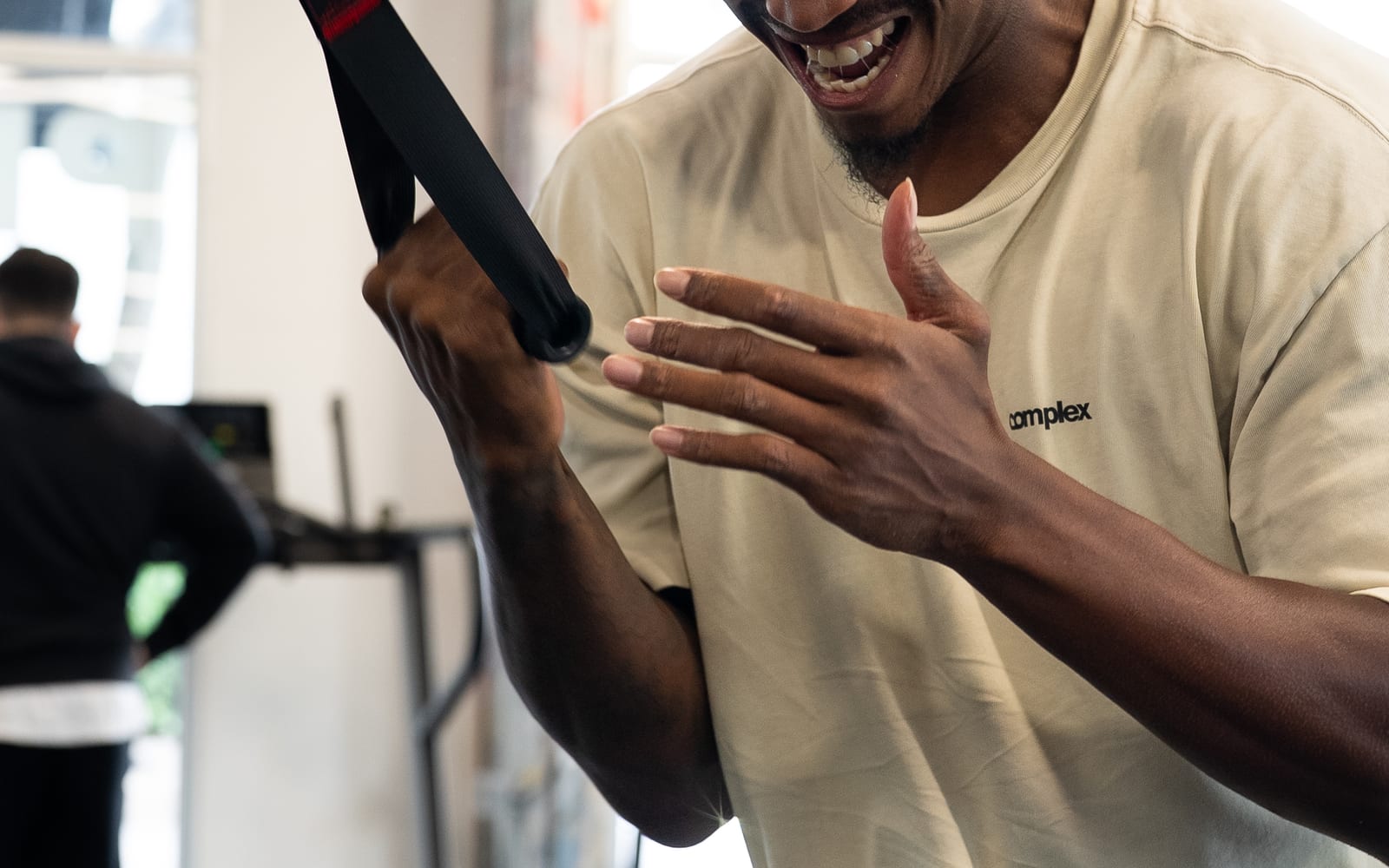
At Complex, rehab does not end when pain drops. We keep loading with intent:
- Corrective work that transfers into your sport or lift
- Strength progressions that respect tissue timelines
- Performance metrics so you know when you are ready for more
Our physical therapy work finds the limits that are holding your pattern back, whether that is mobility, control, or strength in a specific position. Our performance training then builds on those gains so the new movement holds up under real load. You are not handed off between two philosophies. It is one continuous plan.
If your rehab still feels like endless table work, read why the best rehab looks like strength training.
Practical Progressions
- Goblet squat → front squat → back squat
- Split squat → rear-foot elevated → loaded lunge variations
- Landmine press → dumbbell press → barbell press
- Hip hinge patterning → Romanian deadlift → conventional deadlift
Each step earns the next. Skip steps and your body will collect interest later.
Here is how to use them. Stay at a stage until the four-point filter above is easy to pass, not just possible to pass. Then move up one stage, expect the quality to dip a little, and rebuild it before climbing again. That dip is normal, and it is the reason we go one step at a time.
What About Pain That Shows Up Anyway?
Even with clean technique, you may feel some soreness as you train. Muscle fatigue and next-day soreness are different from joint pain that is sharp or sticks around. Pain that gets worse from session to session is a signal to change something, not to push through it.
Get evaluated for sharp pain, numbness, swelling, pain at night, or if you cannot bear weight. Those are not training problems to fix with more warm-up sets.
Frequently asked questions
How do I know if my form is good enough to add weight?
Check whether you can move through your full planned range without pain, control both sides similarly, and keep your positions on the last reps of a set. If those hold up and you recover well the next day, small increases are usually reasonable. A PT or coach can look at your movement and give specific feedback.
Do I need to fix every movement flaw before I lift heavy?
No. Small differences between people are normal. We focus on faults that limit your performance, repeat under fatigue, or relate to a current or past injury. The goal is useful control, not perfection.
Can movement quality work happen alongside heavier training?
Yes. We often pair a lighter focus on pattern control with strength work the body is already ready for. That keeps you progressing while the weaker links catch up, instead of pausing everything to "fix" one thing.
Ready to Build Strength That Holds Up?
If you want a plan that cleans up your movement and then builds on it, we can help at our South Miami or Wynwood location. An evaluation is the quickest way to find out what is limiting your lifts and what to do about it.
Strong is good. Strong and clean is better.
Let's get you better. Start your rehab plan with Chris or book an evaluation.
Ready to Start Your Journey?
Tell us your goals and we'll build a personalized plan to get you moving, stronger, and performing at your best.