

Kettlebells for Universal Fitness
Kettlebell training isn't a trend—but it doesn't directly translate to athletic performance the way many assume (the goblet squat is the main exception). It does translate well to building pure strength through tensegrity, irradiation, and neural drive, plus shoulder and hip stability in many cases. The reason it doesn't directly carry over to the field or court is that the positions you find in sport aren't necessarily mimicked by a lot of traditional strength and conditioning: feet flat, heels down, wider-than-shoulder-width stances, quad dominance, and anteriorly dominant hips are all linked to poorer athletic performance and higher injury risk. At Complex Physical Therapy & Performance, we still use kettlebells for what they're great at—and we keep a short list of five movements that deliver the most fitness transfer. Unlike machines or barbells alone, kettlebells demand full-body coordination, grip, and conditioning in one tool.
Why Kettlebells Work
The offset center of mass and handle of a kettlebell force your body to stabilize and generate force in multiple planes. Swings, carries, and get-ups build posterior-chain power, core stiffness, and work capacity in patterns that support general fitness: hip drive, anti-rotation, and sustained effort. For building strength, explosiveness, and conditioning, kettlebell training checks all three. Unlike a barbell, the kettlebell doesn't sit symmetrically on your body—so your core and grip are always engaged. That carryover is why we keep the tool in our performance programs year-round.
The 5 Movements That Translate to Fitness Gains
1. Kettlebell Swing (Two-Arm and Single-Arm)
The swing is the foundation. It teaches hip hinge mechanics, explosive hip extension, eccentric breaking forces, and tension and relaxation (yin and yang flow). We use two-arm swings for max power and single-arm swings for anti-rotation and grip endurance. Focus on a crisp hip snap and a flat back; the arms are just connectors. The bell should float to chest height from hip drive, not from pulling with the arms. Start with a weight you can control for 10–15 crisp reps; add load only when form stays solid.
Transfer: Force production, vertical jump, and conditioning. (It doesn't help with change of direction or sprinting.)
2. Goblet Squat
The goblet squat improves squat pattern, core bracing, and vertical spine position with a simple load in front. It's one of the best tools for teaching a solid hip hinge and keeping the chest up without collapsing. Use it as a warm-up, a primer, or a main lift with heavier load. Hold the bell at the chest, elbows inside the knees at the bottom, and drive the knees out. Use it to groove the squat pattern before adding a bar or for standalone leg and core work in kettlebell training.
Transfer: Squat pattern quality, knee and hip resilience, leg strength and endurance.
3. Turkish Get-Up (TGU)
The TGU is a full-body drill: you go from lying to standing while holding the kettlebell overhead. It trains shoulder stability, hip mobility, core control, and coordination through multiple positions. It's not about speed—it's about control and tension from finger to toe. Even light loads deliver big benefits for kettlebell training. Perform each rep slowly: roll to the elbow, then extend to hand, then bridge, sweep the leg through, half kneel, stand, then reverse the steps to get back down. One to three reps per side with a moderate bell is often enough when done with full focus.
Transfer: Shoulder health, rotational stability, spatial awareness, injury resilience.
4. Mid-Rack Farmer Carry (and Suitcase Carry)
Carries build grip, core stiffness, and postural endurance. The single-arm (suitcase) carry adds anti-lateral flexion: your core has to resist tipping to the loaded side. Heavy, short carries for strength; longer, moderate loads for conditioning. Walk 30–60 seconds per arm or for distance; keep the torso upright and avoid leaning away from the weight. Switch arms and repeat. For even more challenge, add a waiters carry (bell overhead) on the other arm.
Transfer: Core stability, grip endurance, contact readiness.
5. Single-Leg RDL (with Kettlebell)
The single-leg RDL trains balance, hamstring and glute strength, and hip stability on one leg. Adding a kettlebell in the opposite hand (or same hand) increases load and anti-rotation demand. It's a go-to for reducing knee and hamstring injury risk and improving single-leg control. Hinge at the hip while the back leg lifts; keep the standing knee slightly bent and the pelvis level. Touch the bell to the floor or a target when possible; control the return. Use a light to moderate bell and prioritize balance and control over load.
Transfer: Hamstring health, and deceleration.
How to Program Kettlebell Training
- Off-season / base: Use all five 2–3x per week; emphasize technique, moderate volume, and progressive load.
- In-season: Prioritize swings and carries for 1–2 short sessions; keep get-ups and single-leg RDLs for maintenance.
- Conditioning: Circuit swings, goblet squats, and carries with short rest for work capacity.
- Injury prevention: Goblet squats, TGUs, and single-leg RDLs as staples for mobility and stability.
Quality beats weight. Master the pattern first, then add load and density. If you're new to kettlebell training, get a movement screen and a few sessions with a coach so these five movements become assets, not risks.
Choosing the Right Weight and Volume
Start lighter than you think. For swings, a weight that allows 15–20 crisp reps without form breakdown is a good baseline. For goblet squats, use a bell that lets you hit depth with a braced core. For get-ups, even 8–12 kg (or 15–25 lb) is enough to train stability and control. Increase load only when you can complete the prescribed sets and reps with perfect form. Volume depends on your sport and phase: off-season allows more total work; in-season we keep sessions short and intense so you're fresh for practice and games.
A Sample Kettlebell Session
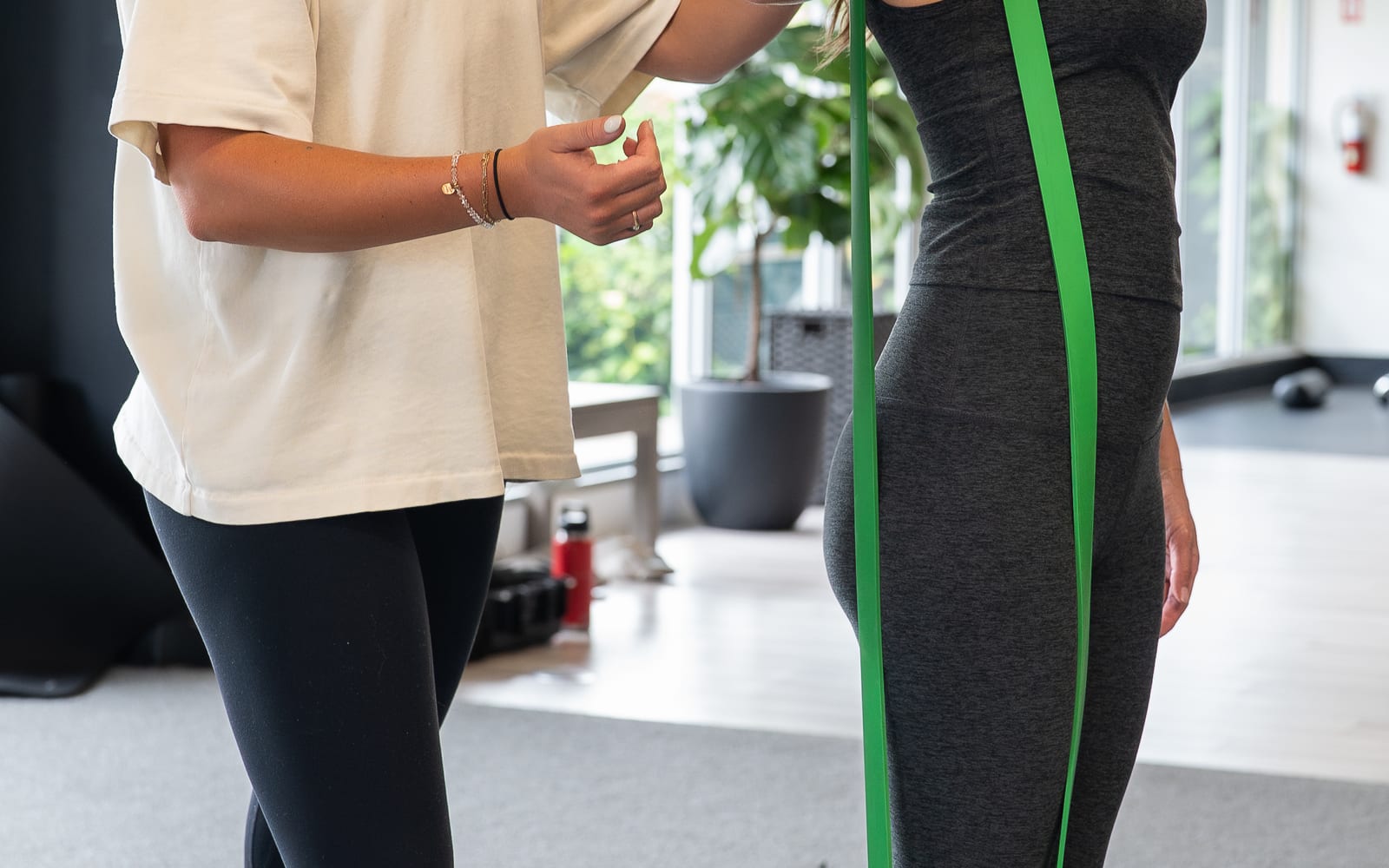
A simple 30–40 minute session might look like: warm-up (world's greatest stretch, hip circles, high knees, lateral shuffle, cariocas); 3–5 TGUs per side; two-arm swings 4 x 15; single-arm swings 2 x 12 per arm; goblet squats 3 x 10; suitcase carry 2 x 30 s per arm; single-leg RDL 2 x 8 per leg. Adjust volume and load based on your level and the rest of your training. This structure gives you the full kettlebell training toolkit in one session.
What to Avoid When Training With Kettlebells
Common mistakes in kettlebell training include using a weight that's too heavy too soon (leading to rounded backs on swings or get-ups), doing high-rep swings with poor form (turning it into a lower-back exercise), and skipping the get-up because it's "weird" or slow. The get-up is one of the best tools for shoulder stability and full-body control—don't skip it. Also avoid doing only two-arm swings; single-arm work builds anti-rotation and grip that transfer well. Finally, pair kettlebells with your other training—they're not a replacement for sprinting or sport practice, but they complement them. Use kettlebell training as your conditioning and durability base, then practice your sport for skill and speed.
Training systems like GOATA (Greatest of All Time Actions/Athletes) are more geared toward athletes and indicative of sport translation—see GOATA movement for athletes.
Let's get you better. Build your kettlebell and performance plan with Jawanza or book a session.
Ready to Start Your Journey?
Tell us your goals and we'll build a personalized plan to get you moving, stronger, and performing at your best.