

Bench Press Without Shoulder Pain
Shoulder pain during bench press does not automatically mean you need to stop pressing forever. It does mean your shoulder is tired of your nonsense. Maybe your setup is loose, your grip is too wide, your volume jumped, your rotator cuff is underprepared, or your shoulder blade is doing absolutely whatever it wants.
The good news: most lifters can get back to pressing with a smarter plan. The bad news: that plan is not "ignore it and max out anyway." Pain is information. Use it.
If your goal is to fix shoulder pain bench press issues without losing all your training momentum, we need to look at technique, tissue capacity, scapular control, and load management. Let's get it.
Why Bench Press Irritates Shoulders
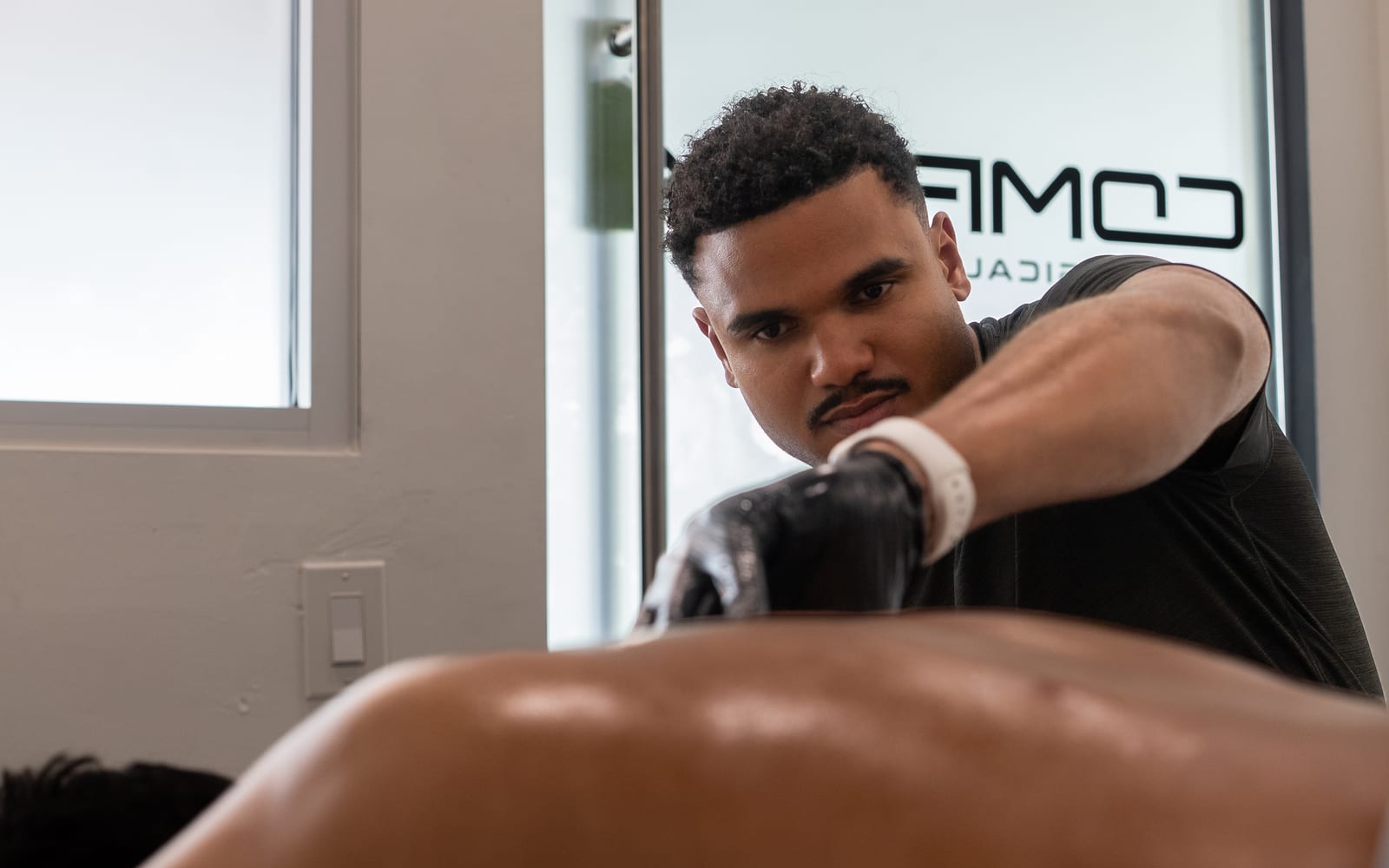
The bench press loads the shoulder in horizontal abduction and external rotation while asking the pecs, triceps, anterior deltoid, rotator cuff, and scapular stabilizers to coordinate. When that coordination is clean, pressing can be strong and pain-free. When it is messy, the front of the shoulder often gets angry.
Common problems include:
- Grip too wide
- Elbows flared too high
- Shoulder blades not retracted or depressed
- Bar path too high on the chest
- Too much volume too soon
- Weak rotator cuff or scapular stabilizers
- Limited thoracic mobility
- No pulling strength to balance pressing
Research on bench press technique suggests that grip width and scapular position can influence shoulder loads. Narrower grips and scapular retraction may reduce certain glenohumeral and acromioclavicular stresses. Translation: setup matters. A lot.
First Rule: Stop Testing Pain Every Session
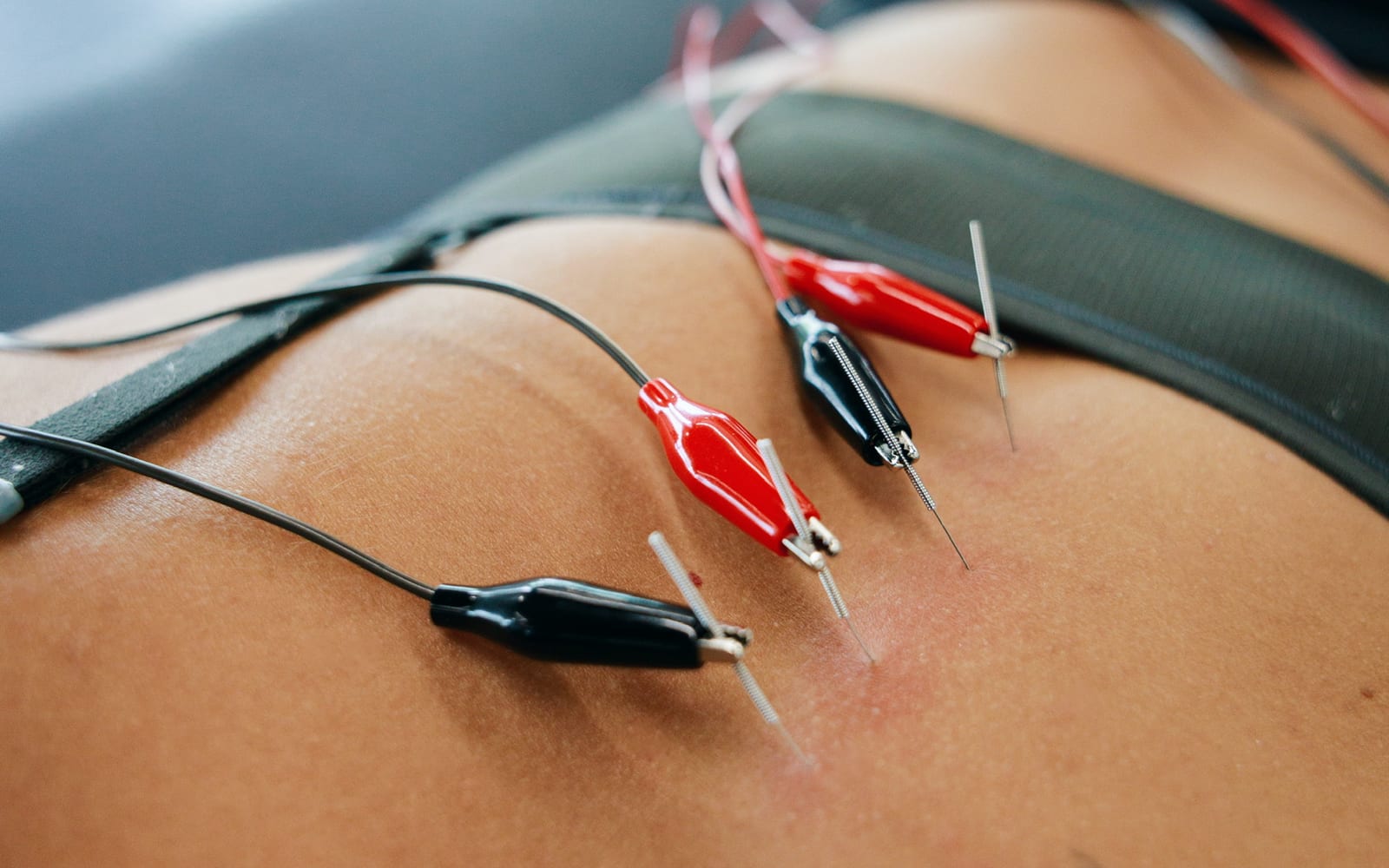
If your shoulder hurts every time you bench, stop turning every workout into a diagnostic reenactment. "Let me see if it still hurts" is not a plan. It is how you keep poking the bear.
Use a pain rule:
- 0-2 out of 10: usually acceptable if it does not worsen
- 3-4 out of 10: modify load, range, grip, or exercise
- 5+ out of 10: stop and change the plan
- Symptoms worse the next day: dosage was too high
This is where load management matters. Your shoulder might tolerate pressing twice a week but not four heavy sessions plus dips plus overhead work plus throwing. The tissue does not care that your program looked cool.
Fix 1: Set the Shoulder Blades
Before you unrack, pull the shoulder blades back and slightly down. Think "shoulders in back pockets," not "shrug to your ears like you heard bad news."
This gives the shoulder a stable base. The rotator cuff can do its job better when the scapula is not floating around. If you cannot hold that position with an empty bar, you have no business loading heavy.
Try this setup:
- Feet planted.
- Upper back tight.
- Shoulder blades retracted and depressed.
- Ribs controlled.
- Bar path toward lower chest.
We are doing this simply because it's best for your function, but also because it's what I chose. You may now stop benching like a folding lawn chair.
Fix 2: Adjust Grip Width
A super-wide grip may let you move more weight for a while, but it can increase shoulder stress for many lifters. If the front of your shoulder hurts, bring the grip in.
A good starting point is around shoulder width to 1.5 times shoulder width. You should feel strong without the elbows flying directly out to the side.
Grip changes can reduce irritation immediately for some people. If the pain drops with a narrower grip, that is information. Keep the change while you rebuild capacity.
Fix 3: Control Elbow Angle and Bar Path

Your elbows do not need to be pinned to your ribs, but they also should not flare to 90 degrees. Most lifters do well around 45-70 degrees of elbow angle depending on anatomy, goal, and grip.
The bar should usually touch around the lower chest or sternum, not up near the collarbone. A high touch point often increases shoulder stress and turns the press into an irritation machine.
Video your lift from the side and front. If the bar path is inconsistent, your shoulder may be paying for it.
Fix 4: Rebuild the Rotator Cuff and Scapular Stabilizers
Shoulder-specific exercise is well supported for rotator cuff-related shoulder pain. But it needs to be dosed correctly. Random band external rotations forever are not enough.
Build a progression:
- Side-lying external rotation
- Cable external rotation
- Face pulls
- Serratus wall slides
- Scap push-ups
- Prone Y/T raises
- Bottoms-up carries
- Landmine presses
The rotator cuff centers the humeral head. The scapular stabilizers give the cuff a platform. If one side of that team is lazy, pressing gets uglier.
Fix 5: Keep Training Around It
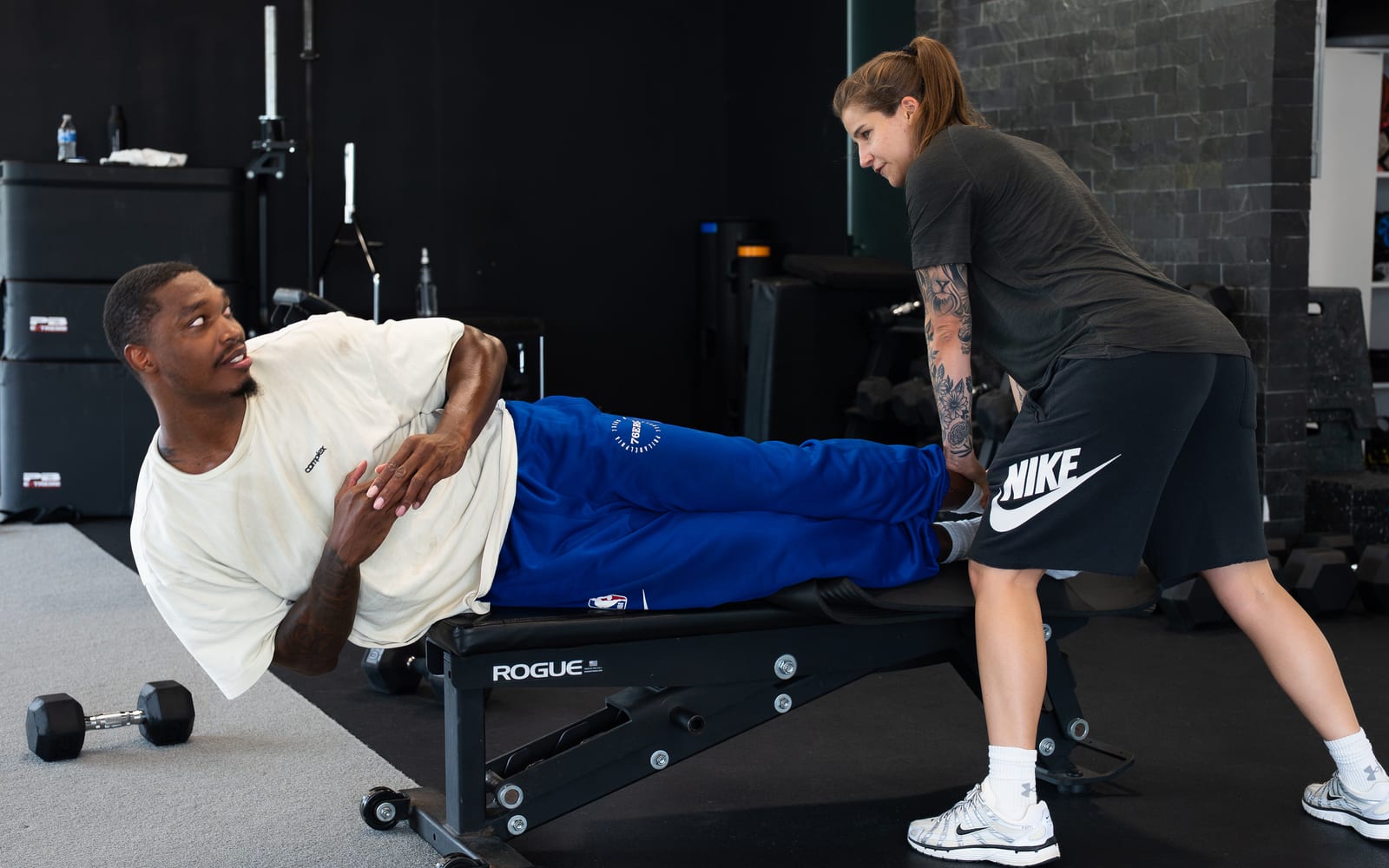
Do not panic and stop everything. Modify.
Options include:
- Push-ups with handles
- Neutral-grip dumbbell press
- Floor press
- Landmine press
- Tempo bench with lighter load
- Pin press above painful range
- More pulling volume
This is where strength-based rehab becomes useful. We do not just rest and hope. We find the tolerable entry point and build from there.
When to Get Assessed
Get help if you have:
- Pain that is sharp or worsening
- Night pain
- Significant weakness
- Pain after a pop or traumatic event
- Numbness or tingling
- Symptoms that persist despite smart modifications
One-on-one assessment helps identify whether this is technique, mobility, strength, tendon irritation, AC joint sensitivity, or something else. The individual basis matters.
Quick Takeaways
- Shoulder pain during bench press is often related to setup, grip, load, or control.
- Scapular retraction and depression create a better pressing platform.
- A narrower grip can reduce shoulder stress for many lifters.
- Rotator cuff and scapular strength need progressive loading.
- You can usually train around shoulder pain with smart exercise modifications.
- Pain that worsens or persists deserves an assessment.
FAQs
1. Should I stop benching completely?
Not always. If pain is mild, you may be able to modify grip, load, range, or exercise variation. Sharp or worsening pain needs a bigger change.
2. Are dumbbells better than barbells?
They can be because they allow a more natural arm path. But they still need good control.
3. Should I do more rotator cuff work?
Probably, but it needs progression. A few lazy band reps will not fix a pressing program that overwhelms your shoulder.
4. Why does incline press hurt more?
Incline pressing demands more shoulder flexion and can irritate sensitive tissues. Modify angle and load.
5. Can shoulder mobility fix bench pain?
Sometimes. But mobility without strength and pressing control rarely solves the whole problem.
References
- Mausehund, L., et al. (2024). "Effects of bench press technique variations on musculoskeletal shoulder loads and potential injury risk." Frontiers in Physiology.
- Lin, M., et al. (2025). "Specific modes of exercise to improve rotator cuff-related shoulder pain: systematic review and meta-analysis." Frontiers in Bioengineering and Biotechnology.
- Hanratty, C. E., et al. (2012). "The effectiveness of physiotherapy exercises in subacromial impingement syndrome." Seminars in Arthritis and Rheumatism.
- Cools, A. M., et al. (2014). "Rehabilitation of scapular dyskinesis: from the office worker to the elite overhead athlete." British Journal of Sports Medicine.
Let's get you better. Start your rehab plan with Chris or book a session so your pressing gets strong again without your shoulder filing complaints every Monday.
Ready to Start Your Journey?
Tell us your goals and we'll build a personalized plan to get you moving, stronger, and performing at your best.